
Qinling Mountains
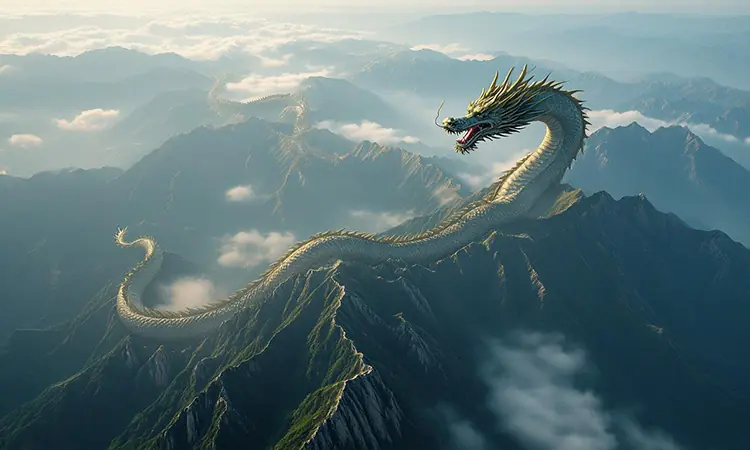
On the geographical map of China, the Qinling Mountains are like a horizontal dragon, dividing the north and south with a body that stretches 1600 kilometers and nurturing civilization. This mountain range is not only a geographical climate boundary, but also a spiritual totem of Chinese civilization. From being referred to as the “ancestor of the dragon vein” in the Book of Changes to being regarded as the “foundation of power” by emperors throughout history, the Qinling Mountains carry the deepest cultural genes and historical memories of the Chinese nation.
1、 Geographical Meridian: Natural Wonders of the Creation of Heaven and Earth
1. Epic masterpiece of plate movement
The formation of Qinling Mountains has undergone 2.5 billion years of geological evolution:
Foundation of the Pre Cambrian: The ancient Qinling Ocean closed 1 billion years ago, triggering the collision between the North China and Yangtze plates, forming the embryonic form of the mountain range
Indochina Movement: 230 million years ago, plate compression caused the Qinling Mountains to rise, becoming a watershed between the Yangtze River and the Yellow River
The Yanshan Movement Shapes the Soul: 80 million years ago, fault activity shaped the main peaks of Mount Taibai and other mountains, forming the deep landforms of the current “Seventy Two Valleys”
Its unique position as the ‘Central Mountain Range’ has created:
Climate boundary: blocking the southward cold current in winter and the northward warm and humid current in summer, forming a phenological zone with significant differences between the north and the south
Water system hub: 23 major rivers including the Wei River, Han River, and Jialing River originate here, with an annual runoff of 20 billion cubic meters, making it the “central water tower”

2. Natural Laboratory of Biological Evolution
As a global hotspot for biodiversity, the Qinling Mountains preserve:
Quaternary Glacier Relics: The top of Mount Taibai preserves an ancient glacier terrace at an altitude of 3500 meters, which is a key sample for studying climate change
Species gene pool: Among 3839 plant species, 31 are endemic species; Among the 8 first-class protected animals, the Four Treasures of Qinling Mountains (giant panda, golden monkey, takin, and crested ibis) form a unique ecological totem
2、 The pulse of history: the coordinates of civilization for the rise and fall of dynasties
1. The place where the dawn of civilization first appears
1.15 million year human footprint: Stone tools unearthed from the Lantian Ape Man Site prove that it was the earliest center of ancient human activity in East Asia
Cradle of Yangshao Culture: The painted pottery patterns at the Banpo site reveal the complete social structure of the matrilineal clan society 6000 years ago
The origin of agricultural civilization: Archaeological discoveries of Banpo people planting corn and raising livestock confirm the earliest agricultural revolution in the Yellow River Basin
2. Strategic pivot for the rise of the empire
Zhou and Qin’s Hegemony: The Zhou people established a ritual and music system based on the Guanzhong Plain, while the Qin people unified the six states through the transportation of the Wei River, with the Qinling Mountains as their strategic rear area
Han and Tang Dynasties: Chang’an City relied on the timber, mineral resources, and water transportation of the Qinling Mountains to become the world’s largest city at that time; The Silk Road extends from the ancient Qinling Mountains to the west
Military Fortress:
Liu Bang’s’ hidden Chen Cang ‘breakthrough through the natural danger of Qinling Mountains
Zhuge Liang was trapped on the Qinling Trail during his five northern expeditions
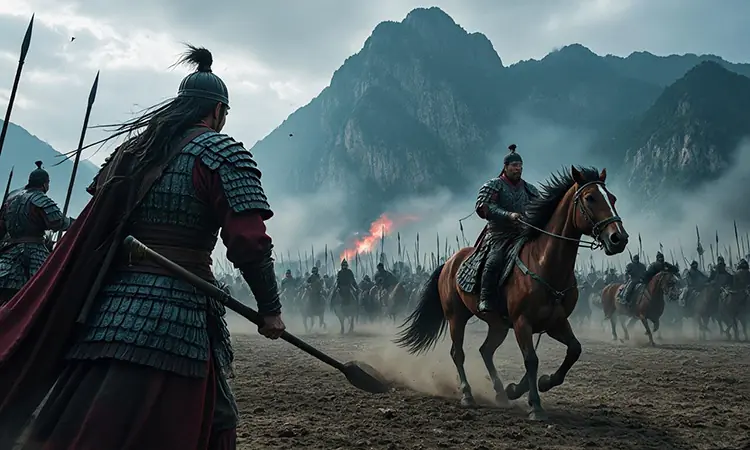
Mongolian cavalry diverted to Xiangyang due to the obstruction of Qinling Mountains
There are many wild medicinal plants in the Qinling Mountains.
3. A spiritual melting pot of cultural integration
Coexistence of Confucianism, Buddhism, and Taoism:
Confucianism: Zhang Zai, the founder of Guanxue, wrote “Ximing” in Qinling Mountains
Taoism: Laozi wrote the Tao Te Ching in Zhongnan Mountain
Buddhism: Kumarajiva translates 3 million words of scriptures at Caotang Temple
Literary imagery group:
Wang Wei’s “Walking to the Water’s End, Sitting and Watching the Clouds Rise” in Wangchuan
Han Yu’s Lament of Exile: ‘Where is the Cloud Crossing Qinling Mountains Home?’
Li Bai’s Romantic Imagination of ‘When the West is Too White, there is a Bird Path’
3、 The cultural pulse: the deep metaphor of the dragon pulse symbol
1. Symbols of national fortune in feng shui and geomancy
Xingsheng Pattern: Qinling Mountains are like a “giant dragon” occupying:
Headrest Kunlun Mountains
Left side view of the Loess Plateau
Right Hand Bashu Basin
Tail sweep North China Plain
Emperor’s Dragon Vein: Qin Shi Huang referred to Qin as the “spine of the world”, and during the Han Dynasty, the Qinling Mountains were included in the “Emperor’s Five Zhas” sacrificial system. Imperial tombs were often located on the northern foothills (such as the Qianling and Zhaoling)

2. Concrete expression of philosophical ideas
Yin Yang Dialectics:
Dryland agriculture on the northern slope and rice cultivation civilization on the southern slope
The thickness of the Wei River and the elegance of the Han River
The Tai Chi culture symbolizing the harmony of heaven and earth
Unity of Heaven and Man:
The hermit culture of Zhongnan Mountain embodies the Taoist view of nature
The perilous peak of Mount Huashan inspires the Confucian spirit of “gentleman self-improvement”
3. The collective carrier of national memory
Epic narrative:
The Classic of Mountains and Seas records that “the head of Mount Hua is called the Mountain of Money”
The phrase ‘Jie Bi Nan Shan’ in the Book of Songs has become a symbol of patriotism and patriotism
Modern Awakening:
In 1935, the Red Army crossed the Qinling Mountains and began a new chapter of the Long March
The construction of Qinling National Park highlights the new concept of ecological civilization
4、 Guarding and Rebirth: The Contemporary Mission of Dragon Vein
1. The Century Project of Ecological Protection
National Park System: Qinling National Park, launched in 2020, covers 44000 square kilometers and protects 25% of the global population of crested ibis
Technology Empowerment:
Satellite remote sensing monitoring of forest coverage (has reached 69.65%)
Drone patrol of rare animal habitats
2. Innovative practices in cultural inheritance
Digital activation:
Restoration of the Afang Palace Site by Digital Museum
VR technology reproduces the ancient Qinling Road of the Silk Road
Integration of Culture and Tourism:
The Zhongnan Mountain homestay cluster inherits the culture of seclusion
The Hanjiang Ecological Corridor connects Wuhou Temple and Zhangliang Temple
3. Eastern wisdom in global governance
Climate regulation: Qinling Mountains sequester 120 million tons of carbon annually, equivalent to reducing emissions from 1.6 Three Gorges power stations
Cultural Dialogue:
The permanent site of the “the Belt and Road” Ecological Forum is located in Foping
Giant panda diplomacy becomes a model for biodiversity conservation
Conclusion: The eternal backbone of civilization
The “veins” of Qinling Mountains are not only the divine works of geological movement, but also the spiritual bloodline of civilization inheritance. From the spark of the Lantian ape man striking the stone tools to the camel bell of the “the Belt and Road” across the continents, this mountain range has always been tolerant, witnessing the transformation of Chinese civilization
from obscurity to glory. When modern civilization meets ancient wisdom in the Qinling Mountains, what we guard is not only green mountains and clear waters, but also the eternal coordinates of the national spirit. As the glacier ruins on the top of Mount Taibai silently tell: only by respecting nature and inheriting cultural heritage can the Chinese dragon sustainably soar.
