potatoes
1. Gifts from the Andes Mountains (8000-1532 BC)
On the shores of Lake Titicaca in Peru, the Incas created the agricultural civilization of “tying ropes to record events” using domesticated potatoes. Archaeologists have discovered potato starch granules dating back 7000 years in a site at an altitude of 4000 meters. The cold resistance of this crop makes it the only food in the Andes that can withstand frost. The Spanish conqueror de la Vega recorded in “The History of the Inca Empire”: “The Incas made ‘chu ñ o’ from potatoes and preserved them for several years through freeze-drying technology, which was the earliest freeze-dried food for humans. ”

2. Species Revolution in the Age of Discovery (1570-1650)
In 1570, Spanish colonizers transported potatoes from Peru to the port of Seville, but Europeans initially regarded them as ornamental plants. The planting records of the Royal Botanic Gardens in London in 1618 show that potatoes were sold for the same price as silver and were only used as exotic flowers and plants in aristocratic gardens. The turning point occurred during the Prussian famine in 1740, when Frederick the Great issued the “Potato Planting Order”, forcing farmers to set aside one-third of their land in vegetable gardens to plant potatoes, which became a model case for modern agricultural promotion.
3. The Three Paths of Introduction of the Eastern Empire (late 16th to 18th centuries)
The Northwest Land Route says that the Silk Road caravans brought potatoes into Gansu and Shaanxi, and in 1628, Xu Guangqi recorded in the “Complete Book of Agricultural Policies” that the “soil taro” originated from this source
Southeast Sea Road says: Dutch colonizers were introduced to Fujian through Taiwan, and there are already records of planting in the Dinghai County Annals in 1700
Palace Secret Legend: During the Wanli period, eunuchs distributed potatoes grown in imperial gardens to the people. Workers from the Xishan coal mine in Beijing survived for three months by storing potatoes in cellars during Li Zicheng’s siege of the city in 1644
4. Relief crops during the Kangxi and Qianlong reigns (1723-1820)
In the seventh year of the Qianlong reign (1742), the Qing court issued the “Promotion of Sweet Potato Seeds Edict” and ordered the Governor General of Zhili, Fang Guancheng, to draw the “Sweet Potato Map” and distribute it to various provinces. Shanxi Governor Chen Hongmou recorded in his book “Advice on Potato Planting” that “one acre of potato planting by mountain farmers can cover ten acres of grain fields.” According to the “Qing Shilu” statistics, in 1793, the Henan Governor reported that the potato planting area had reached 3 million acres, accounting for 12% of the province’s arable land.

People who like potatoes also enjoy the delicious red dates.
1. Taste memory of common culture
Beijing snacks: “Wangji Fried Potato Cake” in the front door of the Republic of China pioneered the 168 layer thin cutting technique. In 1935, “Beiping Fengwu Lei Zheng” recorded that “Potato cake with coke rings and fermented sour milk made from ground mung bean wow gold is the three treasures of civilians”
Jianghu cuisine: Chongqing’s “mashed potato hotpot” turns potatoes into golden paste, which has a three times stronger ability to absorb spicy soup than tofu
Industrial Revolution: In 1958, the cafeteria of Changchun First Automobile Manufacturing Factory invented “potato noodles”, which had a protein content 18% higher than wheat noodles
2. Imagery expression in literature and art
Lu Xun described in “Social Drama”: “The stolen potatoes are cooked in the stove, and the burning fragrance penetrates the night
Mo Yan’s “Red Sorghum Family” uses “potatoes are as white as a daughter-in-law who has not passed through the door” as a metaphor for pure love
The scene of Feng Xia selling potatoes in Zhang Yimou’s movie “To Live” has become a symbol of memories of the times
3. Metaphors of Identity in Modern Society
According to Meituan data in 2023, China consumes an average of 120 million kilograms of potatoes per day, including:
72% as a side dish for dishes
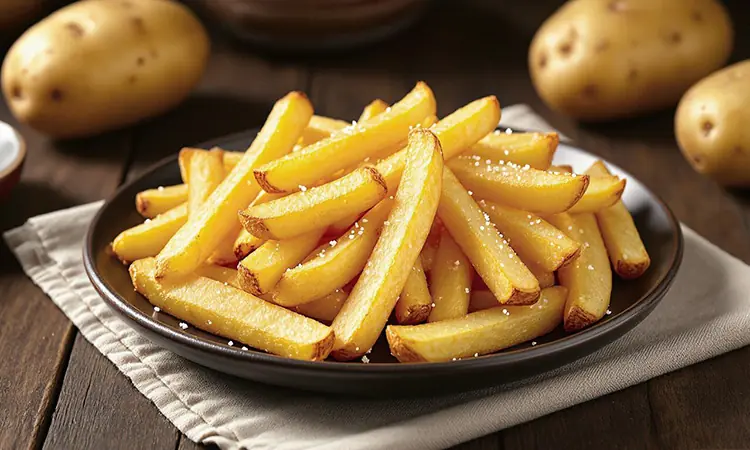
18% processed into potato chips/fries
10% for direct consumption
This consumption structure reflects the “supporting role dilemma” – The 2019 Chinese Residents’ Dietary Guide recommends that potatoes be included in the staple food, but the actual substitution rate is less than 3%.
Global Table Staple Food Battle (2025 Global Data)
Top 5 countries in terms of the degree of staple food conversion
Cultural characteristics of staple food conversion rate in national annual consumption (10000 tons)
Russian 1829 68% black bread with pickled cucumber traditional
Poland 708 82% “Potato Festival” selects 100 cooking methods
Ukraine 2136 75% red cabbage soup essential potato chunks
Peru 580 91% uses potato flour to make ‘Purple Jade Rice Cake’
Ireland 420 57% Traditional Wedding Essential Potato Bread
2. Analysis of the dilemma of China’s main grain transformation
Genetic defect: Potatoes have a moisture content of 79%, and the cost of processing them into whole wheat flour is three times that of wheat
Cultural inertia: The deep-rooted dietary habit of “steamed buns with pickled vegetables” in North China
Policy weakness: Since the implementation of the main grain strategy in 2015, only five provinces including Shanxi and Inner Mongolia have been included in the assessment
3. Future food wars
The Food and Agriculture Organization of the United Nations predicts that by 2050, the world will need to increase food production by 60% to feed 9 billion people. The potential yield per mu of potatoes is 8 tons (2.3 times that of wheat), and the planting altitude can reach 4500 meters. China is promoting the “potato corn intercropping” model in the southwestern high-altitude mountainous areas, which has increased the per acre output value by 400 yuan.
Decoding the nutrition code: super ingredients beyond staple food
1. Nutritional density comparison (per 100g of edible portion)
Index potatoes, rice, wheat, corn
Dietary fiber 1.5g 0.6g 1.2g 2.4g
Vitamin C 14mg 0mg 0.4mg 5mg
Potassium element 342mg 55mg 280mg 218mg
Glycemic index 59 83 74 70
2. Revolution in healthy eating habits
Low temperature oil immersion method: Soak potato slices in 60 ℃ olive oil for 15 minutes to increase polyphenol content by 200%
Resistance starch generation: After cooling potatoes for 24 hours, resistance starch increases by 50%, equivalent to an increase in dietary fiber
3D printed food: Israeli company prints’ future meat patty ‘with 25% protein content using mashed potatoes
3. Dietary plan for special populations
Patients with diabetes: select the “Shapoti” variety, whose resistant starch content is 30% higher than that of ordinary potatoes
Weight loss population: Replacing dinner staple with potatoes, combined with white kidney bean extract, can reduce waist circumference by an average of 2.1cm per month
Athlete: The combination of baked potatoes and whey protein increases muscle glycogen synthesis efficiency by 18%
Potato Philosophy in Civilization Dialogue
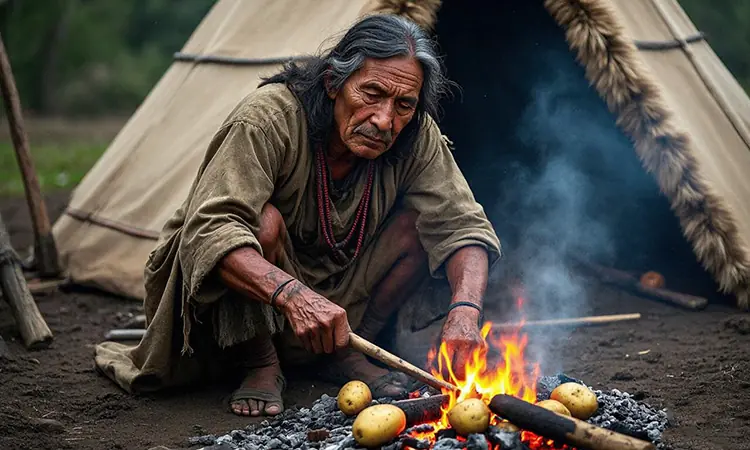
The dissemination history of potatoes, from the “underground apples” in the Andes to the “underground cabbage” in China, is essentially a microcosm of cultural exchange. When we boil potato slices in hotpot, the tip of our tongue jumps with the wisdom of the Inca ancestors, the adventure of Spanish colonizers, Xu Guangqi’s agricultural exploration, and the innovation of contemporary food scientists. This kind of taste dialogue that transcends time and space is the most touching chapter of human civilization.
In the context of the worsening global food crisis, re evaluating the value of potatoes is not only a dietary choice, but also a profound reflection on the continuation of civilization. When potatoes on the Chinese table move from “supporting role” to “leading role”, it may indicate a new integration of oriental food wisdom and global agricultural civilization.