
In 2025, the global wealth landscape will reach a historic turning point. According to the latest data from Forbes, the number of billionaires worldwide has surpassed the 3000 mark for the first time, reaching a record high of 3028, an increase of 247 from 2024. The total wealth of these billionaires soared to $16.1 trillion, a year-on-year increase of $2 trillion – a figure exceeding the GDP of any country except the United States and China. Against the backdrop of intensified global economic fluctuations, the asset size of the top wealth group has shown a counter trend expansion, with an average net worth of $5.3 billion per billionaire, an increase of $200 million from the previous year.
The concentration of wealth has further increased, with 15 billionaires worldwide surpassing the threshold of billions of dollars, forming a unique “12 figure wealth club”. Although they only account for 0.5% of the total number of billionaires, they control about 15% of their total wealth (approximately $2.4 trillion). Among them, the assets of three top billionaires have surpassed the $200 billion mark, breaking the upper limit of wealth accumulation.
Table: Core Indicators of Global Wealth Distribution in 2025:
Historical significance of year-on-year growth of indicators in 2025
The total number of billionaires is 3028+247, breaking through the 3000 mark for the first time
The total wealth scale of 16.1 trillion US dollars plus 2 trillion US dollars exceeds the GDP of any country except for China and the United States
15 billionaires and 1 billionaire account for 15% of the total wealth
Average wealth of 5.3 billion US dollars+2 billion US dollars reaches a historic high
From a geographical distribution perspective, the global wealthy population exhibits a highly concentrated geographic feature. The United States ranks first with 902 billionaires, followed closely by China (including Hong Kong) with 516, and India ranks third with 205- these three countries contribute more than half of the world’s billionaires. If we focus on the top ten in the world, the advantage of the United States is even more significant, occupying eight seats (the remaining two seats belong to France and Spain), with the technology industry occupying seven of them, highlighting the dual hegemony of the United States in technology innovation and capital markets.
The Wealth Domination of Tech Giants
Elon Musk: The Cosmic Wealth of Cross disciplinary Innovation
Elon Musk remains the world’s richest person with a net worth of $342 billion, and his wealth has surged by 75% year-on-year (an increase of $147 billion), becoming the first billionaire in history to break through the $300 billion mark. This South African born entrepreneur has built a business empire spanning multiple cutting-edge technological fields:
SpaceX: valued at $350 billion, becoming the world’s most valuable private enterprise. The commercialization of its “Starship” Mars program and Starlink satellite network is progressing smoothly, with over 3 million global users.
Tesla: Despite the intensified competition in the global electric vehicle market, the V12 version of its FSD (fully automated driving) system was approved in many countries, driving the proportion of software service revenue to 25%.
XAI: After merging with social media platform X, the open source big model Grok-4 was launched, and the number of enterprise users increased by 200% quarterly.
Recently, Musk has crossed over into politics and served as the Secretary of State for Efficiency in the US government. He has led a large-scale layoff plan for federal agencies, aiming to reduce government spending by $1 trillion. He has announced that he will step down after achieving his goal by the end of May 2025.
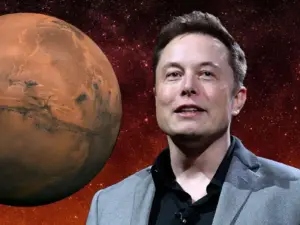
Mark Zuckerberg: The AI Transformation of the Social Empire
Zuckerberg has risen to second place globally for the first time with a net worth of $216 billion, and his wealth growth is mainly due to Meta’s deep layout in the field of artificial intelligence
Llama Large Model Open Source Ecosystem: The download volume of the third-generation open source model has exceeded 100 million times, establishing industry factual standards.
Commercialization of smart glasses: Meta Ray Ban, in collaboration with Ray Ban, has over one million daily active users, opening up a new track for AR hardware.
AI transformation of advertising business: AI driven advertising delivery system reduces advertiser acquisition costs by 32% and drives Meta’s net profit growth of 45% in 2024.

Huang Renxun: The biggest winner of the AI wave
Huang Renxun, with a net worth of 98.7 billion US dollars, ranks 16th in the world (some are listed in the top 10), becoming a new benchmark for wealth in the Chinese speaking world. The surge in its wealth is due to Nvidia’s absolute dominance in the AI chip market:
H100 GPU has a market share of over 90%: the cornerstone of computing power for global AI big model training, with a shipment volume of 3.5 million pieces by 2024.
CUDA Ecological Barrier: The developer community has surpassed 5 million people, forming an insurmountable software moat.
Blackwell architecture breakthrough: The performance of the new generation AI chip has been improved by 30 times, the energy efficiency ratio has been increased by 25 times, and the pre order volume has exceeded 20 billion US dollars.
Nvidia’s stock price surged 171% in 2024, surpassing Microsoft in market value and becoming the world’s most valuable technology company.

The wealth map of other technology leaders
Larry Ellison ($192 billion, 4th place): Oracle Cloud Services benefits from enterprise AI transformation, with database market share rebounding to 42%. Recently acquired cybersecurity company Palo Alto Networks for $11 billion.
Larry Page ($156 billion, 6th place) and Sergey Brin ($149 billion, 7th place): Co founders of Google, Alphabet achieved a breakthrough in quantum computing and completed the world’s first quantum simulation of drug molecules.

-
Wealth representatives of diversified industries
Bernard Arnault: The Adjustment Period of the Luxury EmpireArnott fell to fifth place globally with a net worth of $178 billion, marking its lowest ranking since 2017. LVMH Group is facing a ‘luxury winter’ in 2024, with a decline in stock prices leading to a decrease in wealth
Brand Matrix Restructuring: Among its 75 brands, 3 underperforming fashion lines will be closed, focusing on the high-end customization business of core brands (LV, Dior, Tiffany).
China strategy adjustment: adding 12 “boutique salon stores” in second tier cities to provide private shopping experiences and offset the decline in sales in first tier cities.
Sustainable Fashion Transformation: Investing $500 million to develop bio based leather materials in response to EU environmental regulations.

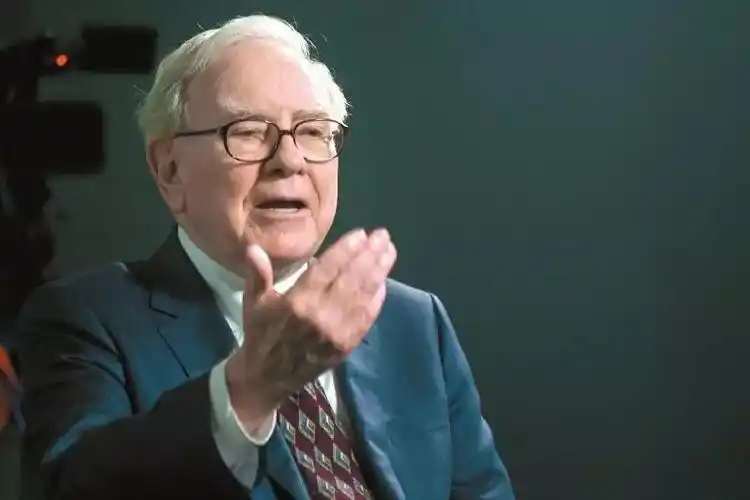
Warren Buffett: A Defender of Traditional Investment
94 year old Buffett maintains sixth place in the world with $154 billion, and his Berkshire Hathaway leadership is expanding its presence in the energy sector
Acquiring Dominion Energy: Investing $11.3 billion to gain control of the US East Coast natural gas network.
Japanese trading company strategy: Holding over 9% of shares in five major trading companies including Mitsubishi Corporation and Itochu, with a dividend income of $1.2 billion in 2024.
Charitable Commitment: Announced to donate 99.5% of personal assets to charitable organizations such as the Gates Foundation, practicing the concept of “wealth returning to society”.
Zara founder ranks ninth with $124 billion, and this 89 year old Spanish billionaire controls the global fast fashion lifeline through Inditex Group:
Vertical supply chain advantage: On average, it takes 14 days from design to launch, which is three times faster than competitors.
AI inventory management system: Reduce excess production by 30% and increase gross profit margin to 58.7%.
Expansion in emerging markets: 87 new stores added in India, e-commerce sales in Southeast Asia increased by 67%.

Reconstruction of the map of female billionaires
In 2025, there will be 406 female billionaires worldwide, accounting for 13.4% of the total number of billionaires, a slight increase of 0.1 percentage points year-on-year. However, the wealth structure of women shows significant differentiation:
The inheritor of a wealthy female entrepreneur
Nearly three-quarters of wealthy women’s wealth comes from inheritance, and the four wealthiest women in the world are all inheritors:
Alice Walton ($101 billion): the successor of Wal Mart, invests in precision medicine through the family office.
Fran ç oise Bettencourt Meyers ($81.6 billion): L’Oreal’s third-generation leader, driving the brand’s green transformation.
Julia Koch family ($74.2 billion): Koch industrial controllers leading the research and development of biobased materials.
Jacqueline Mars ($42.6 billion): Mars Candy Queen, acquires healthy snack brand Kind.
A self-made entrepreneurial leader
Among the 113 self-made female billionaires worldwide, 6 are under the age of 40. Representative figures include:
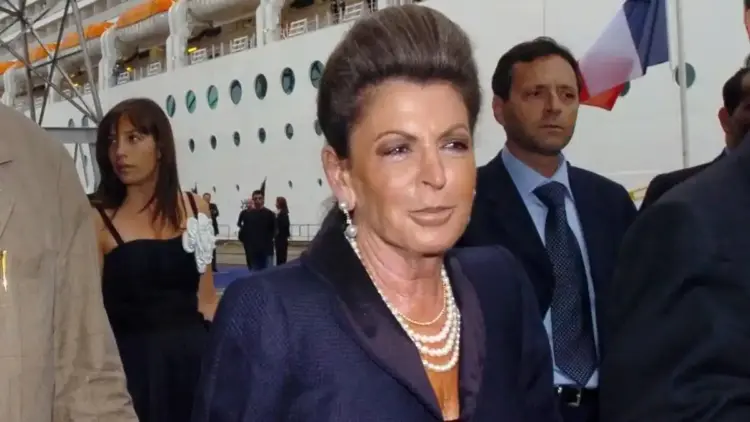
Rafaela Apente Diamante ($37.7 billion): The world’s self-made richest woman. In 1970, she co founded Mediterranean Shipping (MSC) with her husband and currently operates a capacity of 6.47 million TEUs, accounting for 20% of the global total. In March 2025, its terminal company TiL participated in the acquisition of 43 ports in the Changhe series, with a transaction value of 22.8 billion US dollars.
-
Lucy Guo ($1.25 billion): 30-year-old Chinese, co-founder of Scale AI. The company provides data annotation services for large models such as ChatGPT, with a valuation of $13.8 billion. Recently founded the creator platform Passes.
Melanie Perkins ($5 billion): 37 year old Australian, founder of graphic design platform Canva, with over 150 million users.Table: Distribution of Global Female Wealthy Types in 2025
The proportion of individuals with different types of wealth represents their sources of wealth
293 inherited wealth 72.2% Alice Walton Wal Mart inherited
Starting from scratch, 113 people, 27.8% Rafaela Apente Mediterranean Shipping
6 entrepreneurs under 40 years old 1.5% Guo Lusi Scale AI
Regional distribution and national competitiveness
The United States: The Absolute Overlord of Technology CapitalThe United States ranks first with 902 billionaires, of which 18 are among the top 25 in the world. In addition to tech giants, emerging forces continue to emerge:
Alexander Wang (28 years old): Founder of Scale AI, the world’s youngest self-made billionaire, whose company provides AI data services to the Ministry of Defense.
Trump ($5.1 billion): Wealth doubled, mainly due to the listing of Truth Social and cryptocurrency investments.
Asia: A New Engine for Wealth Growth
China (including Hong Kong): 516 billionaires, led by Zhang Yiming (65.5 billion US dollars), Lei Jun’s wealth doubled to 43.5 billion US dollars, benefiting from the mass production of Xiaomi electric vehicles.
India: 205 billionaires, Mukesh Ambani ($65.5 billion) leads 5G nationwide coverage, with Reliance Industries’ stock price rising 37% annually.
Singapore: 49 billionaires, 97 year old Wu Qingliang (13 billion US dollars) remains the richest person, with Japan Paint Holdings accounting for 19% of the global coatings market.
Europe: The Integration of Luxury Goods and Traditional Industries
France: led by Arnault, followed by L’Oreal heiress Mayes.
Russia: 15 new billionaires have been added (out of a total of 146), with 70% starting from scratch and advancing in both the energy and IT sectors.
The core driving force of wealth growth
Capturing the dividends of technological revolution
AI Industrialization: Companies such as NVIDIA and Meta have experienced a significant increase in wealth due to the commercialization of AI technology, and the demand for large model training has driven a 300% growth in the GPU market.
Space Economy: SpaceX is valued at $350 billion, and its Starlink program accounts for 61% of the global satellite broadband market.
Biotechnology: Modena CEO Stefana Bansell’s wealth has increased by 58%, and mRNA cancer vaccines have entered phase III clinical trials.
Valuation of the Capital Market
Non public market premium: The valuation increase of unlisted technology companies such as SpaceX and OpenAI exceeds that of the public market, and private equity has become a new source of wealth for the wealthy.
Industry rotation accelerates: In 2024, funds will shift from traditional consumption to the technology sector, with the S&P 500 technology index rising by 45%, directly driving the wealth of high-tech tycoons.
Policy and Geopolitical Factors
The US Chip and Science Act: Semiconductor companies receive $52 billion in subsidies, benefiting stock prices of companies such as Nvidia and Intel.
Relaxation of cryptocurrency regulation: Bitcoin ETF approval drives digital currency rebound, Coinbase CEO Brian Armstrong’s wealth grows 89%.The essence of wealth is a reflection of the times: when Musk’s rocket carries Bitcoin nodes to Mars, when Huang Renxun’s GPU trains trillion parameter models, the global rich list is not only a wealth gauge, but also a progress chart of human technological revolution.
