Poria cocos
Wild Poria cocos is an ancient medicinal herb of the same origin as food and medicine, which has played an important role in the field of health since ancient times. And wild Poria cocos is highly praised for its unique growth environment and nourishing effects. Today, let’s step into the world of wild Poria cocos and explore its mysteries together.
The growth environment of wild Poria cocos
Wild Poria cocos mostly grows in the forests of southern and northern China, mainly at the roots of Pinus massoniana trees, especially in humid, rainy, and sunny environments. This special climatic condition provides a natural advantage for the growth of Poria cocos. In the dense forest, Poria cocos grows quietly, absorbs the essence of nature, and breeds its value.
… In the dense forest, Poria cocos grows quietly, absorbs the essence of nature, and breeds its value.
It is not attached to the surface, but hidden deep underground, forming a wonderful symbiotic relationship with the root systems of specific pine trees such as Pinus massoniana. The mycelium of Poria cocos is like a delicate silver network, quietly winding and wrapping around the deeply buried roots of old pine trees, or attached to decaying pine trees. In warm, moist, well drained sandy acidic soil, and in the air interwoven with the unique fragrance and humus scent of pine forests, Poria cocos began its slow and mysterious journey of growth.

Abundant sunlight shines through the layers of pine needles, casting dappled shadows on the forest, providing necessary warmth and energy circulation for the surface of the earth; Abundant rainwater nourishes the soil, seeps into the depths, and becomes the transporter of the source of life for wild Poria cocos; The humus accumulated year-round under the pine forest provides it with abundant organic nutrients. This environmental combination – the specific substrate provided by pine roots, warm and humid climate, sandy and breathable soil, and scattered sunlight in the forest – together constitute an irreplaceable “cradle” for wild Poria cocos.
Its growth is extremely slow and secretive, often taking several years (usually 3-5 years or even longer) to quietly take shape underground. The mature wild Poria cocos have different sclerotia (what we usually call the medicinal part) in shape, either as round and plump as a fist, or as solid and sturdy as a tuber, with the surface covered with brown folds of different depths, hard and heavy in texture, as if the essence of the earth and the sediment of time are condensed into it. The outer layer is rough, while the inner layer is as white as snow or light brown and delicate,
emitting a faint scent of soil mixed with pine wood. It is not until experienced herb gatherers, with a profound understanding of the environment and keen observation, can carefully excavate pine roots from the dormant underground kingdom by following the path of the roots or subtle signs on the surface, usually harvested in autumn (around September) with good quality.
It is precisely this mountainous environment and the nourishment of long years that endow wild Poria cocos with qualities far beyond ordinary cultivated products, becoming a precious treasure bestowed by nature.

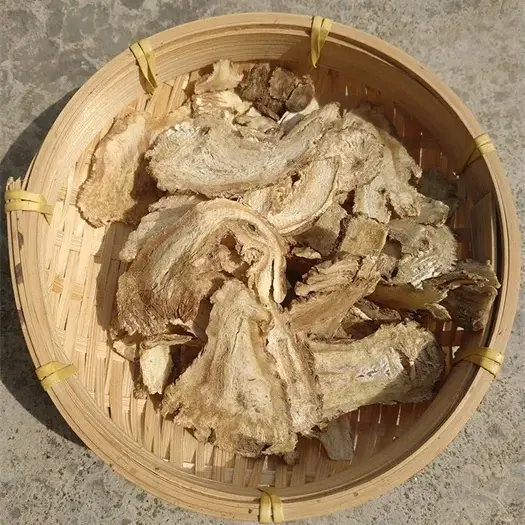
The appearance characteristics of Poria cocos: Poria cocos has a spherical or irregular shape, with a brown or black brown surface, fine wrinkles, and small concave spots. After cutting open, the interior is white or light red, with a solid texture and rich in starch. This appearance feature makes Poria cocos very easy to identify in traditional Chinese medicine.
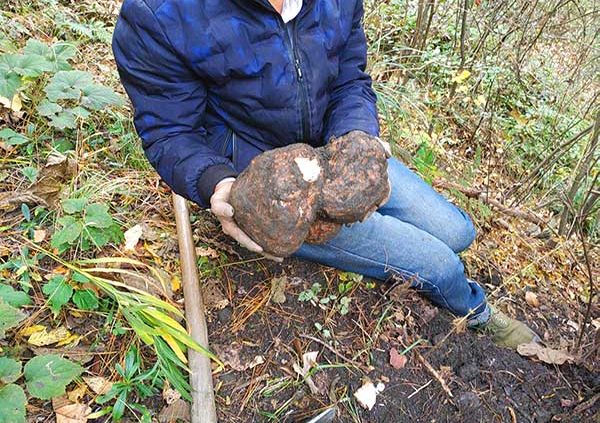
However, the appearance of wild Poria cocos is often more “rugged” and full of natural imprints than cultivated ones. Its sclerotia (i.e. medicinal parts) vary greatly in size, ranging from small ones like walnuts to large ones weighing several kilograms. Its shape is not simply spherical, but rather irregular blocks, clusters, or elliptical shapes in various shapes, as if it were a sculpture created by nature. Its surface is covered with a deep brown to almost black brown outer layer, which is not only dark in color, but also hard, thick, and rough in texture, covered with deep and intersecting network wrinkles (sometimes resembling cracked textures) and significant bumps or depressions. These gullies and potholes are unique “growth rings” left by their interaction with soil, sand and stone, and tree roots during their long underground growth years, and also witness their absorption and concentration of the essence of the earth.
When this tough outer layer is carefully peeled off or peeled off, the value of its internal scenery is truly revealed. The cut surface presents a stunning pure white, delicate pale pink, or warm pale brown color (the depth of color often depends on growth age and specific location). The texture is exceptionally solid and dense, even with a certain heaviness (density greater than water). When cutting with a knife, significant resistance can be felt, and the cross-section is delicate and smooth. Occasionally, light brown veins (mushroom bundles) texture can be seen running through it, like natural veins.
A notable feature is its strong powder like nature. Gently scraping the cut surface with nails or a blade will result in a delicate white powder that is as fine as snow; When cutting with a knife, the edge of the knife often gets coated with a thin layer of powder. This is a direct reflection of the rich content of active ingredients such as Poria cocos polysaccharides, Poria cocos acid, and a large amount of starch in Poria cocos. Fresh wild Poria cocos slices can still be smelled with a faint, unique fragrance similar to a mixture of soil and pine wood, which becomes even weaker after drying.
It is precisely this unique appearance and texture, which is rough on the outside and delicate on the inside, solid and powdery, that not only becomes an important basis for distinguishing the authenticity and quality of Poria cocos, but also intuitively implies its rich medicinal material foundation and powerful nourishing potential. Its rough shell is like a strong fortress, protecting the precious essence inside; The powdery and pure white inside symbolizes its essence. Each wild Poria cocos with different shapes is a work of art crafted by time, environment, and life, waiting for people to unlock its inner health secrets.
The excavation and processing of Poria cocos
The harvesting of Poria cocos is usually carried out in autumn, when the roots of Poria cocos are already full. Care should be taken during harvesting to avoid damaging the roots of Poria cocos. After harvesting, Poria cocos needs to be cleaned, dried and processed to remove impurities and moisture, maintain its quality stability and durability.
However, for wild Poria cocos hidden deep underground in the mountains and forests, its harvesting is not an easy task, but rather a craft that requires experience, patience, and reverence for nature. The best time for harvesting is usually around the ninth lunar month (late autumn), when Poria cocos has fully matured and the accumulated active substances inside are abundant and full. Experienced herb gatherers (often referred to as “Ling Nong”) will determine the specific location and maturity of wild Poria cocos based on the growth status of pine forests, subtle cracks on the surface, changes in soil moisture in specific areas, and even the scent of pine roots. This requires years or even generations of accumulated experience.
The excavation process is extremely cautious and filled with reverence for nature. The farmers will use a special small hoe or narrow shovel to carefully dig out the covered soil and gradually clean along the direction of pine roots. The entire process must be extremely meticulous, with gentle
movements. It is necessary to avoid damaging the deeply buried Poria cocos sclerotia (which are irregular in shape and often closely connected to tree roots and rocks), and to protect the root system of pine trees, in order to promote the sustainable forest ecology and the future regeneration of Poria cocos. Sometimes it takes several hours or even longer to dig out a complete Poria cocos. When the “treasure” hidden deep underground and covered with traces of vicissitudes finally reveals its true face, the farmers will gently carry it out with the joy of harvest, as if welcoming a distinguished guest from the depths of the earth.
The preliminary treatment after excavation is equally crucial:

-
Cleaning: Fresh Poria cocos (known as “Chao Ling”) freshly dug out are covered in soil, sand, gravel, and pine root debris. It is necessary to gently scrub in flowing water (such as mountain streams) to remove most of the surface dirt. Avoid excessive rubbing or soaking to prevent the loss of effective ingredients.
Sweating: After cleaning, Chao Ling does not immediately dry, but needs to go through a special process of sweating. Stack them in layers in a cool, ventilated, dark and humid indoor environment (such as a soil cave or a specially designed greenhouse), covered with straw or burlap bags. Within a few days to a dozen days, the water inside Poria cocos will slowly seep out to the surface (i.e. “sweat”), while some starch will undergo initial transformation. This process helps to distribute the internal moisture more evenly, make the texture denser, and produce a special aroma, which is an important step in improving the quality of Poria cocos. The Ling Farmers’ Association conducts regular inspections to prevent mold growth.
Peeling/trimming: After sweating, the outer skin of Poria cocos becomes relatively soft. At this point, it is necessary to manually remove the rough and dark colored outer layer (known as “Poria cocos skin”, which is also a traditional Chinese medicine). At the same time, according to the size and shape of Poria cocos, they are trimmed into block shaped pieces (called “Poria cocos pieces”) or cut into specific thickness slices (“Poria cocos slices”) for easy subsequent processing and use. Peeling and trimming require skill, which involves removing useless parts while maximizing the preservation of valuable meat.
Drying: This is the core step to ensure the long-term preservation and stable efficacy of Poria cocos.
Traditional method: mainly relies on natural drying. Spread the trimmed Poria cocos pieces or slices evenly on bamboo mats or drying racks, and place them in a well ventilated and sunny area (but avoid direct sunlight). It needs to be flipped repeatedly to ensure even drying. This method takes a long time (several weeks or even longer), but it can largely preserve the natural flavor and active ingredients of Poria cocos. The finished product has a natural color (white or light brown) and a solid texture.
Modern assistance: Low temperature drying (usually controlled below 40-50 ° C) can also be used in bad weather, but the temperature and time need to be strictly controlled to prevent the effective ingredients from being destroyed or the Poria cocos from becoming “stiff”.
-
-
Grading and storage: After complete drying, Poria cocos is strictly graded according to its size, shape, color, texture (solidity, powder), and the presence of insects and mold. High quality Poria cocos should have a solid body weight, delicate and powdery white cross-section, no cracks, and a sticky texture when chewed. The graded finished products need to be sealed and stored in a cool, dry, and ventilated warehouse to prevent moisture and insect infestation.
Every piece of wild Poria cocos, harvested from deep mountains until it becomes a usable ingredient, embodies the gift of nature, the hard work and wisdom of the herb gatherers, and the ingenuity of traditional processing techniques. It is this respect for time (long growth and dryness), adherence to skills (experience judgment and manual processing) and strict demands for quality (careful processing and grading) that makes the precious value of wild Poria cocos completely preserved, and finally transmits its mountain forest essence and health mystery to people.


The consumption method of Poria cocos
Poria cocos can be used as the same source of medicine and food. After it is ground into powder, it can be added to Congee, soup and other foods for eating. It not only tastes mellow, but also plays a role in conditioning. In addition, Poria cocos can also be used in combination with other traditional Chinese medicinal herbs, such as Poria cocos, yam, lotus seeds, etc., to jointly exert its value
As a food with a long history, wild Poria cocos presents diverse possibilities in the kitchen with its unique flavor and texture. Its taste is light and slightly sweet, with a faint earthy and woody aroma. Its texture is sticky and solid, requiring proper processing to fully integrate into the food.
1、 Flexible integration into daily diet:
The application of Poria cocos powder: Grinding dried wild Poria cocos into fine powder is a convenient way to evenly blend its flavor and texture into food.
Congee flavor enhancement: sprinkle a small amount of poria cocos powder (about a teaspoon) into the cooked Congee (such as white porridge, millet Congee) while hot, and stir evenly. It can give Congee a mild grain like aroma and delicate mellow feeling, and add a little glutinous taste.
Thickening soup: When the soup (such as chicken soup or vegetable soup) is almost finished, add a small amount of Poria cocos powder and stir well. It can have a certain natural thickening effect, making the soup smoother and incorporating its subtle flavor.
Pastry baking: Pachyman powder is mixed into flour in a certain proportion (such as 10-15% of flour) to make Mantou, noodles or cakes (such as Pachyman cake and biscuits). The finished product usually presents a natural light brown color, with a texture that may be softer or have a strong sandy feel, and emits a light fragrance.
Drink preparation: add a small amount of poria cocos powder into warm water, milk or soybean milk, and fully stir or shake evenly. You can add a little honey, maple syrup, or diced fruit to season and make a flavored drink.
Cooking of Poria cocos chunks/slices: Use dried Poria cocos chunks or pre cut Poria cocos slices (about 10-15 grams), suitable for dishes that require long-term cooking.
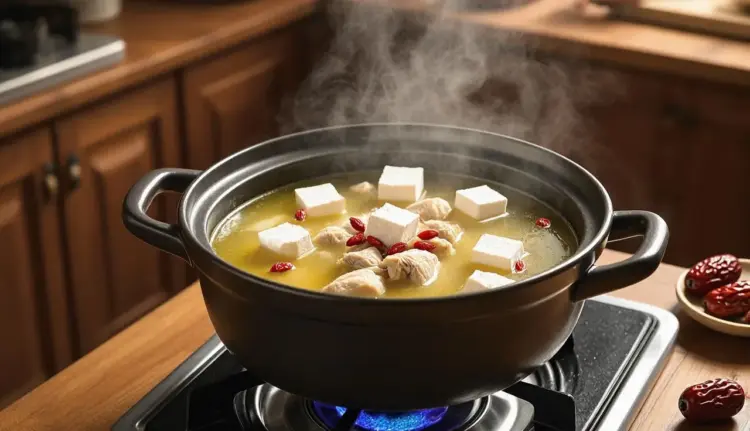
Slow Stew Soup Pot: Put Poria cocos chunks/slices together with meat (such as pork ribs, chicken), root vegetables (such as carrots, lotus roots), beans (such as red beans, eyebrow beans) or mushrooms in a pot and stew slowly. After long-term stewing, Poria cocos will become soft and sticky, and its flavor will gently penetrate into the soup.
Dessert stewing: braise poria cocos pieces/pieces with tremella, lotus seeds, red dates, longans or snow pear and other ingredients to make sweet soup. After stewing, the flavor of Poria cocos itself blends into the soup, bringing a refreshing and sweet base flavor that complements other sweet ingredients.
2、 Common flavor pairing partners:
The flavor of wild Poria cocos is neutral and mild, and can be harmoniously matched with various ingredients to create rich taste levels:
Grains and beans: such as rice, millet, Job’s tears, red beans, and mung beans. Cook together in Congee rice or soup to increase the feeling of glutinous powder and complex aroma.
Roots and fruits: such as yam, lotus seeds, lilies, red dates, longan, chestnuts. Commonly used for stewing soup or sweet soup, forming a combination of sweet, light sweet, or powdery flavors.
Meat and poultry: such as pork (especially pork belly and pork tendon), chicken, and duck. Adding Poria cocos to stew soup can absorb the fat of meat, making the soup more refreshing and mellow.
Other flavor elements:
Sweetener: Honey, brown sugar, rock sugar, etc., can neutralize the lightness of Poria cocos and enhance the flavor of sweet soup.
Aromatic ingredients: such as ginger (to enhance fragrance and remove fishy smell), tangerine peel (to add fruity aroma), goji berry (to add color and slight sweetness).
3、 Creative presentation in modern kitchens:
Flavor base: Water boiled with Poria cocos powder or Poria cocos is used as a natural flavor base for making sauces, dipping sauces, smoothies, or mousse.
Texture improvement: By utilizing its powdery nature, it helps to make vegetarian burger patties, energy balls, or healthy snack bars by helping the ingredients stick together and adding a special powdery texture.
Baking innovation: Adding Poria cocos powder to baked goods such as bread, cookies, and pancakes to add unique flavor and nutritional elements.
Eating tips:
Treatment: Poria cocos chunks have a hard texture and usually require pre soaking or long-term stewing to soften. Poria cocos powder is easier to integrate into food.
Dosage: As a daily ingredient, the dosage can be flexibly adjusted according to personal taste and recipe needs, and usually adding a small amount of flavor is more acceptable.
Flavor: Start with small portions for the first attempt and gradually adapt to its unique flavor. Pairing with other flavorful ingredients such as red dates, longan, and ginger is more easily accepted.
Selection: Choose Poria cocos products that are dry, free of impurities, have a solid texture, and have sufficient powder for better flavor.
From the mountains and forests to the dining table, wild Poria cocos adds a natural charm to our diet with its simple form and unique flavor texture. Whether it is simply sprinkled into Congee, carefully stewed into soup, or integrated into modern creative cuisine, it is an ancient ingredient worth exploring, waiting for diners to discover the possibility of its integration into thousands of flavors.
Suitable population for Poria cocos
Poria cocos is suitable for people of all ages to consume. For most people, consuming Poria cocos has a good effect on regulating the body. Meanwhile, Poria cocos is also an ideal food for the elderly, children, and other groups of people,
In short, Poria cocos, as a precious traditional Chinese medicine and food ingredient, has medicinal and edible value. We should cherish the precious wealth bestowed by nature.
As a food with a peaceful flavor and unique texture, wild Poria cocos has a wide range of applicability on family dining tables:
Flavor universality: Its light and slightly sweet flavor tone with a subtle woody and earthy aroma, neither strongly stimulating nor overly sweet, is easily accepted by taste buds of different ages. Through different cooking methods and flavor matching (such as adding sweet soup or salty Congee), it can be easily adjusted to meet personal taste preferences.
Texture adaptability:
Powder form: after being ground into fine powder, it can be evenly integrated into Congee, soup, pastry and drinks, adding delicate powder, glutinous or thick taste, without abrupt grain feeling, and suitable for people of all ages who pursue delicate taste.
Block/slice form: After sufficient stewing, it becomes soft and sticky, easy to chew and digest, and also suitable for people who like to feel different textures in food.
There are various cooking forms: from simply throwing flour into Congee, to long-term stewing, to modern baking and creative cooking, Poria cocos provides a wealth of choices to meet the needs of different cooking habits and eating scenes.
Integration into daily diet: it does not need a special diet plan, and can be naturally added to the family’s common Congee, soup, tea or snacks as part of the daily diet.
Specifically for people at different stages of life, their dietary characteristics are reflected in:
Adults: They can flexibly apply Poria cocos powder or chunks to the cooking of their daily meals, exploring the flavor layers and taste changes brought by its combination with various ingredients.
The elderly: For the elderly who prefer soft glutinous and easily digestible food, it is more appropriate to stew poria cocos pieces/pieces until soft and rotten (such as adding them into soup or sweet soup), or poria cocos powder into Congee. Its mild flavor is also easily accepted.
Children: Cleverly incorporating a small amount of Poria cocos powder into their favorite foods (such as milk, rice paste, and small pastries) is a way to expose them to the flavor of this traditional ingredient. It is advisable to try a small amount for the first time and pay attention to pairing it with their familiar and favorite flavors (such as milk, honey, fruit).
People who pay attention to the diversity of ingredients: For those who want to add traditional or specialty ingredients to their daily diet, Poria cocos provides a choice with flavor and cultural background.
In summary, wild Poria cocos, a natural gift from the roots of pine trees in the mountains, surpasses the limitations of specific groups with its simple appearance, mild flavor, and diverse plasticity. It is essentially a food ingredient that can be integrated into the daily diet of the general public. Cherishing it means understanding the preciousness of its origin (the uniqueness of the wild environment, the hard work of harvesting), and using creativity in the kitchen to explore how to harmoniously weave this earth derived flavor into the rich and diverse food maps of thousands of households, making it a common and extraordinary taste that connects nature and traditional food culture