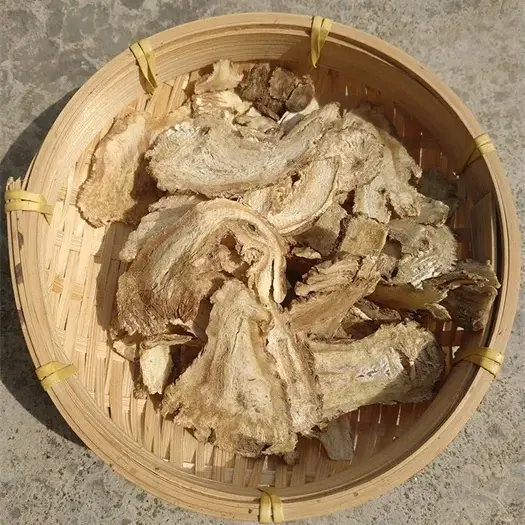
The Natural Epic of the Hidden Ones in the Deep Forest wild yam
In the depths of the misty mountains and forests, a plant wrapped in vines is quietly writing a survival legend – its roots and stems are deeply buried under decaying leaves, forming an ancient staff with brown scales coiled around it. The ancients called it “Shanyu” (ancient name of yam), which means “meeting as a gift from the mountains and wilderness”. Modern times it is called wild mountain medicine.
1、 The secret survival rules of wild yam
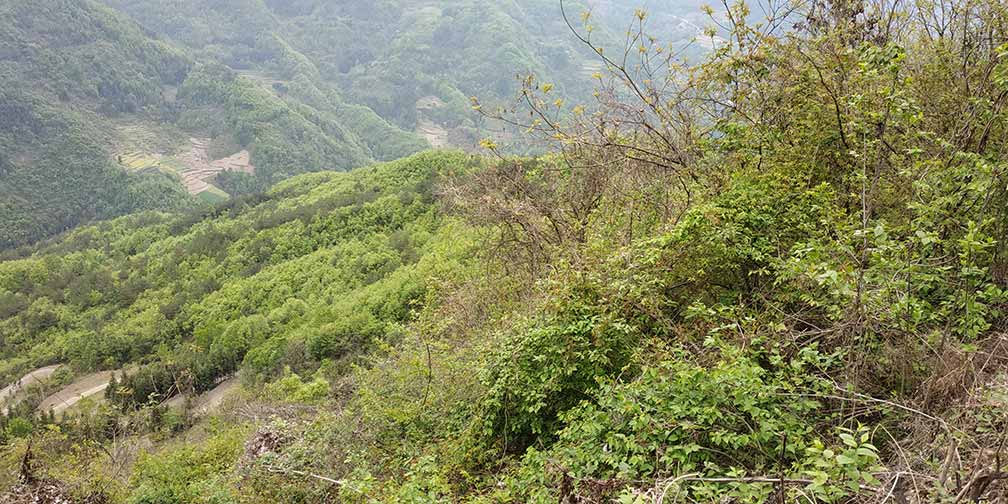
Wild yam is not a pampered guest in a greenhouse, its life code is engraved in the primitive ecosystem above 800 meters above sea level:
Survival Elements, Natural Scene Restoration, Yam Adaptation, Wisdom
Temperature and humidity in the morning and evening fog lock the forest shoots, with an annual average temperature of 15 ℃ ±. Vines are covered with moss to retain water, and the root tubers store cold and resist heat
The soil structure has a humus layer that is over a foot thick, and the gravel seeps through like a sieve. It is drilled into the crevices and shaped like a geological drill bit
Light competition: Trees cover the sky, light spots scatter like broken gold, heart-shaped leaves turn to chase after the light, vines and snakes wrap around trees to borrow height
🌿 Key observations:
In the native secret areas of Ailao Mountain and Qinba hinterland in Yunnan, yam tubers naturally split into a “dragon claw” shape to break through the compacted rock layers (artificial planting is as straight as a stick)
The viscous juice accumulated over the years turns rusty red when exposed to oxygen, which is a “scar badge” that distinguishes it from cultivated products
The Gift of Mountains and Forests: Identifying the Mark of Wild Yam
Imagine walking through lush forests, with sunlight shining through the gaps and casting dappled shadows. Your gaze may be drawn to those seemingly ordinary yet resilient vines – they are slender yet exceptionally tough, like the veins of a mountain, silently winding around trees or low shrubs and climbing upwards, weaving a green web. This is likely the life trajectory of wild yam.
Explore down the vines, push aside the moist soil or fallen leaves, and surprises are hidden within. Its rhizome is a delicacy nurtured by the earth, with a simple yet powerful shape, often in the
form of a thick cylindrical shape, quietly buried deep underground. When first excavated, you will find that its surface is covered with a thin, slightly rough layer of brown “scales”, like the
natural armor bestowed upon it by time and so
il. Carefully brushing away the soil, the mysterious veil of the forest was finally lifted – peeling off the inconspicuous brown coat, inside was surprisingly pure white! The meat is delicate and
smooth, just like coagulating fat and jade, pure enough to be free from dust, as if condensing the essence of the mountains and fields. Gently touching, one can feel the natural flexibility and
fullness.
There are still many stories circulating in the mountains about this inconspicuous rhizome. Old people often say that experienced mountain pickers can recognize it at a glance from the posture of the vines winding around it, the shape of the leaves (they are usually warm heart-shaped with small serrations on the edges), especially the layer of brown “scales” and occasional branching or bending at the end of the rhizome, and judge how long it has been hidden underground and what flavor it has accumulated. Digging out a complete wild yam is often seen as a tacit understanding with nature, a generous gift from the mountains and forests for hard work and knowledge.
This pure white from underground is a familiar figure on the dining table of mountain people, and also carries people’s simple understanding and wise application of natural gifts. How to turn this pure and delicious mountain forest flavor into a pleasant surprise on the tongue? The story and skills behind this are equally fascinating.

Autumn Potato Hunt: Wisdom of Struggling with the Earth and Treasures of Gifts
With the autumn wind, the mountain forest has changed colors, and it is also the golden time to “date” with wild yams. Before and after the frost, the mountain people are well aware of the roots of wild yams at this time. After the quiet accumulation in spring and summer, they have become extremely plump and solid underground, as if the essence of the whole mountain has been condensed into it, and the hidden sweet and glutinous powder has reached the peak. Picking wild yams is not an easy task, but rather a gentle struggle with the earth that requires patience, skill, and respect.
Imagine an experienced old hunter walking lightly through the woods. His vision is like a torch, able to accurately pinpoint the direction of vines that seem casual but actually conceal mysteries. After selecting the target, he was not in a hurry to take action, but carefully cleaned up the fallen leaves and weeds around him, treating it like a precious artwork. The real challenge lies in digging – the roots and stems of wild yams are often deeply buried underground and have a winding and twisting shape, even cleverly bypassing hard rocks or tangled tree roots. The small hoe
or specially made narrow shovel in the old hunter’s hand carries immense caution every time it falls, with precise force and sharp angles. He held his breath and patiently excavated and cleared
the soil along the veins of the roots, as if conducting a meticulous archaeological excavation. ‘Don’t be in a hurry, stop as soon as you’re in a hurry!’ This is a lesson passed down from generation
to generation. That focus, that reverence for natural creations, is only to bring out the complete, fragrant ‘white jade’ from the ground. When a handful of soil is brushed away, revealing the
sturdy and naturally scaled treasure, the joy of harvest, mixed with the scent of sweat and soil, is the most simple reward in the mountains and forests.

Freshly excavated wild yam carries the moisture and vitality of the earth. Gently wash them to remove the soil without damaging the natural protective film. Next, it is to preserve the ancient wisdom of this wild mountain. Mountain people will carefully place these treasures in cool and ventilated wooden sheds or corners of old houses, spread them on dry straw or bamboo strips, and let the mountain breeze gently carry away excess moisture. This’ yin dry ‘is to better stimulate its inherent sweetness and flavor.
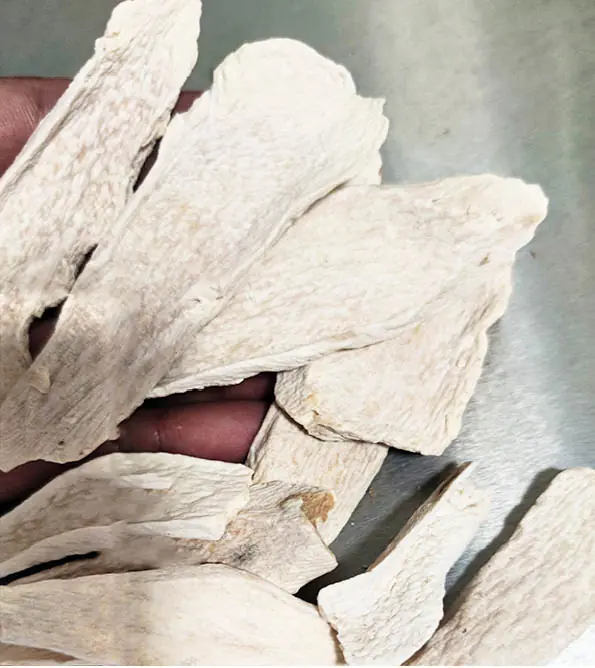
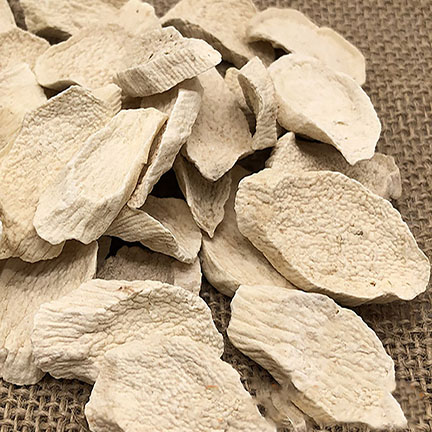
However, to keep this autumn gift for a longer time, until the cold winter or the following year, a more clever transformation is needed – to make dried yam slices. The washed yam is skillfully sliced into even thin slices, each one sparkling white. On a clear day, patches of “white jade” spread out in the courtyard and on the hillside. They gradually shed moisture under the gentle
baking of sunlight, becoming thin, flexible, and turning into a warm beige color. The sunshine not only takes away moisture, but also seems to quietly lock the sunshine and wind flavor of the mountains and forests into every dry piece. Drying is also a common method, but mountain people always say that natural sunlight gives dried slices an irreplaceable “taste of the sun”.
These pieces of dried or dried yam are concentrated mountain essence. They are lightweight and durable, carefully stored in breathable cloth bags or pottery jars, and kept in a dry place. Whenever you take it, you only need a few pieces, or make Congee, or soup, or soak in water. The deep mountain flavor and natural sweetness will be revived, bringing the taste of the distant mountains to the ordinary table. This is the wisdom crystallization of mountain people who cherish time and continue delicious food.

Ningcui Mountain Wilderness: The Natural Taste Nurtured by the Earth
When the fingertips touch the crystal clear gum layer of wild yam, they touch the most authentic language of the mountains and forests. This smooth slime is a natural masterpiece brewed by rainwater and soil over time. It wraps around the roots and seals the purity of the mountains. If you carefully appreciate this gift from underground, you can feel a gentle tolerance – it is not ostentatious, but silently carries the changes of the sun and moon in the mountains and forests.
Older generations often hold a bowl of steamed yam and exclaim, ‘This is a’ peacemaker ‘grown in the soil!’ Because of its soft and smooth texture, it can blend with various flavors. Whether it’s the thick and smooth soup that melts into the stew or the sweet aroma that emanates after steaming, it reminds people of the valley shrouded in morning mist – not stimulating but deeply ingrained in people’s hearts. This gentle texture originating from the earth is the reason why people cherish it for generations.
The scent of mountains and forests awakened by stove fires: the wild transformation from earthen stoves to dining tables
1. Yamano Original Flavor: Simple Ritual
When smoke rises from the wooden houses of forest rangers in the deep mountains, one can often see scenes like this: freshly dug wild yams with moisture, without peeling or cutting into pieces, are buried directly into the scorching ash of the stove. After the outer skin is cracked and peeled off, the heat evaporates, and the meat solidifies like sheep fat. Dip it in a bit of coarse salt, and the original sweetness mixed with the fragrance of firewood instantly fills the lips and teeth – this is a direct dialogue between the mountain people and the earth.
2. Versatile Soul: Yamano Concerto on the Tongue
Fatification and Ganlu: Ancient Method of Stewing Soup
Grandmother’s pottery jar was singing softly over the charcoal fire, while a few dried wild yam slices floated up and down with the pork ribs. Miraculously, the seemingly withered dried slices were reborn upon contact with water, gradually releasing milky white gelatinous substances that dyed the soup with a moonlight like radiance. Scoop a spoonful into the mouth, the silky touch enveloping the mountain clear air, as if flowing through a clear stream in the throat.
Mountain Breeze in Stir Fry: Crispy and Resilient Duet
Stir fry wild garlic in an iron pot until fragrant, then cut fresh yam into diamond slices and stir fry over high heat. At high temperatures, the mucus turns into a transparent coat, tightly locking in the wonderful taste of crispness and powdery texture. If accompanied by black fungus and bamboo shoots, it is a symphony of crispness, smoothness, and toughness. When the chopsticks are lifted, the silver threads sway like a spider web in the wind that cannot be pulled.
3. Time Cellar: Nirvana of Dry Slices
Those dried yam slices refined by autumn sun are amber sealed in season. Grab a handful and throw it into boiling water. The curled body gradually stretches out, shedding the burnt yellow and regaining its jade color. When cooking Congee, it becomes invisible, leaving only the grain of rice wrapped with satin like luster; Soaking in camellia leaves one floating and sinking like a boat, with clear water gradually tinged with light gold, and sipping like morning dew dripping from the woods on the tip of one’s tongue.

Empathy in the mountains: a human fireworks connected by roots and stems
As the morning light swept over the terraced fields in the hills of southern Anhui, wild yams soaked in dew lay in the back basket of the herb gatherer. His three-year-old grandson stood on tiptoe and picked up one, his little finger curiously touching the wet soil on the root – this carried the gift of wild respiration, never refusing any pair of hands reaching for it.
At a banquet after the autumn harvest in a village in western Zhejiang, the silver haired elder slowly twirled steamed yams between his teeth, and the smile at the corner of his eye revealed memories: “When I was young, I carried a piece of wood down the mountain, and there was always a piece of ash simmering in my arms. I couldn’t bear to throw it away even if it was hot.” The playful children by the stove were attracted by the amber colored soft cake made by their grandmother with dried yam slices and honey, and the sweet and tender taste burst out, becoming a footnote to their childhood mountain flavor.
It can be the warm Congee rolling in the snow night traveler’s pottery jar, the light gold tea soup floating in the office glass, and the vacuum sealed dry piece in the traveler’s luggage – no matter where the tip of the tongue comes from, when the gentle wipe from the fertile soil slides through the throat, it seems that there is a soft sound of pines on the teeth and cheeks.
Rest in peace with the mountains
When we cut open the fatty section of wild yam, what we see is not only a dense texture, but also an epic of soil and monsoon. From the wisdom of deep forest mining, to the morning frost spreading on the sun field, to the transformation brought about by the stove fire – every touch on it is a ritual of bowing to nature.
May we use bamboo baskets instead of iron shovels, and air drying instead of quick drying, to protect this slow growing wildness in the fast times. Let the green vines entwining in the forest be reborn every year, and let the jade color cherished by the earth never run out. Because when we learn to breathe with the mountains, what flows between our teeth is not just the taste, but also the constant echo of all things.