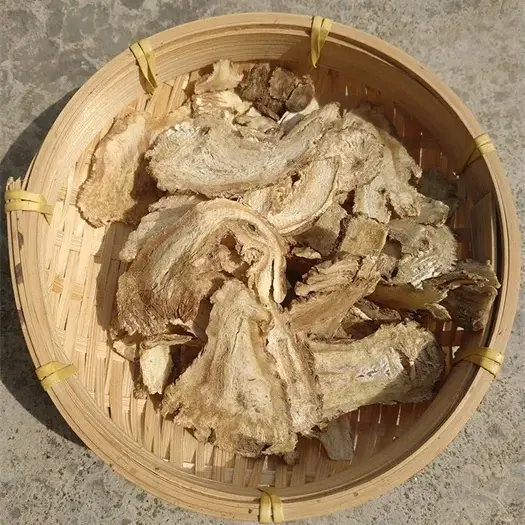
Fulong liver
Long, long ago (at least during the Han Dynasty), our ancestors built earthen stoves in every household to burn and cook. Day after day, year after year, the firewood burns with a crackling sound, and the food in the pot gurgles and bubbles. In the center of this smoky and fiery stove, an inconspicuous piece of soil is undergoing an extraordinary ‘cultivation’.
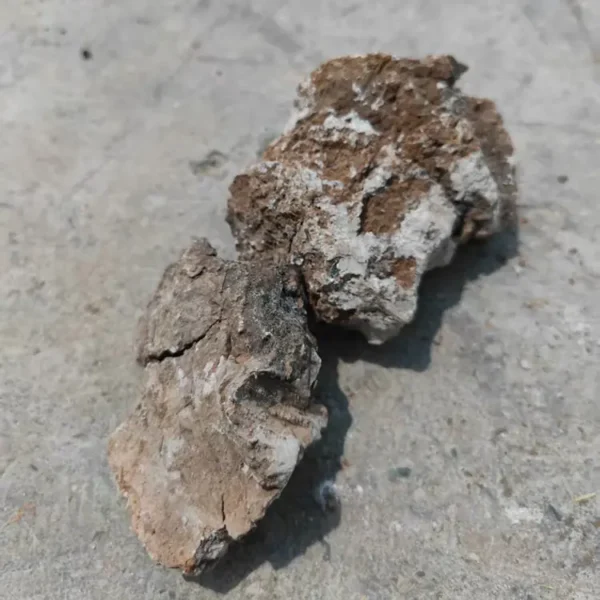
It was repeatedly burned by raging flames, smoked by heat waves and thick smoke for a long time. How can ordinary loess withstand this? But the soil in the center of this stove, in this “alchemy furnace” like environment, has been baked to a different state! Some colors have changed from yellow to a burnt red brick, or even darker, approaching the color of ochre; The texture also changes from being soft to being loose when pinched, and some become as hard as stones, whether hard or soft, making a loud sound when knocked.Fulong liver
The ancients looked at this soil lump that had been pulled out of the stove and had undergone a significant change in appearance, and felt that it was very unusual. It withstood the fireworks of the Kitchen God and must have “divine power”! So I gave it a majestic and vivid name – ‘Fulong Liver’! The meaning is that this piece of soil can even subdue the flames of the ‘Dragon King’ (which reflects the ancient people’s reverence and imagination for the power of nature). Of course, the common people speak more truthfully and simply call it “stove heart soil” or “stove chamber soil”, indicating its origin.
So, who discovered earlier that this’ old stove soil ‘might be useful?
There is no specific person in history who tasted it, but it can be imagined that in the long course of life, there must have been some events that caught the attention of ancient people. Perhaps a cooking stove in a certain house collapsed, and the soil from the stove fell into the boiling water. People found that the water settled and became particularly clear; These accidental discoveries in life gradually accumulate into experience.
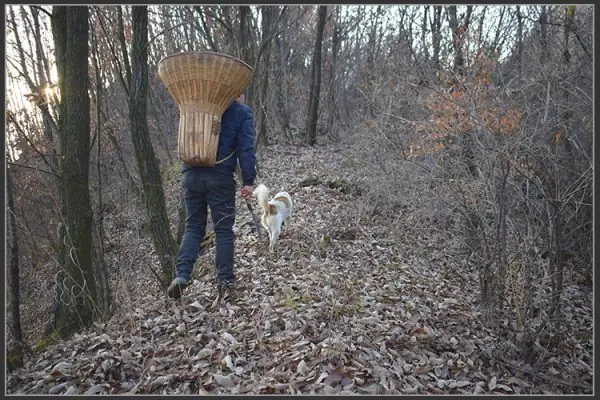
The fame of this’ old stove soil ‘truly rose during the Eastern Han Dynasty. The famous doctor Zhang Zhongjing (revered as the “saint of medicine” by later generations) recorded a prescription called “Huangtu Tang” in his medical books. The “Huangtu” used in it refers to this type of stove core soil (Fulong liver) that has been burned for a long time. Zhang Zhongjing is a doctor who
observes meticulously and respects folk experience. He is likely to have collected and organized the experience of using Hearthstone in folk culture, and written it into a book. This writing elevated this clump of soil from a rural stove to the realm of elegance, becoming a thing recorded in the traditional knowledge system.
What exactly did it go through to become so ‘special’?
The secrets are all forged by the accumulated stove fire over time! Ordinary soil has complex composition, loose structure, and is easy to dissolve when exposed to water. But the soil in the center of the stove has undergone a “physical and chemical transformation” under the long-term effects of high temperatures (possibly up to thousands of degrees) and smoke generated by the combustion of firewood.
High temperature “shaping”: The intense fire melts and cools some components in the soil, just like burning bricks and ceramics, making the soil particles “stick” tighter and become very hard and dense.
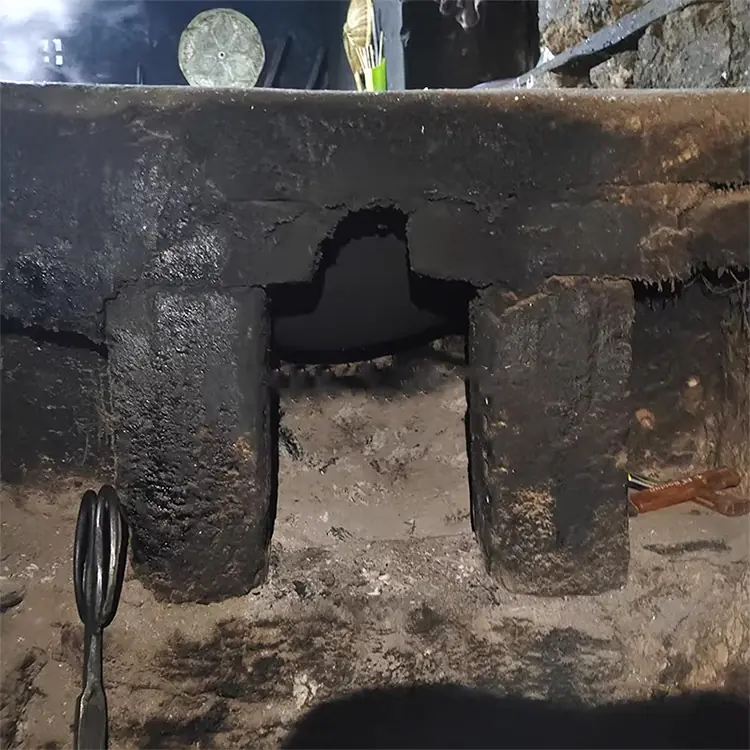
Pores open wide: The gases and volatile substances produced during the combustion process escape, leaving countless tiny pores and pores in the soil, making its structure resemble a sponge.
Ingredient “purification”: Prolonged heating may alter the form of some minerals and remove certain volatile impurities.
The result of these changes is that this core soil has become extremely hard, porous, with strong adsorption capacity (like activated carbon that can absorb things), and its properties are very stable. The ancients observed these physical properties (such as being able to absorb impurities, make mixed water clearer, and feel gentle when in contact with wounds), combined with their cognitive system, giving it some cultural interpretations and applications.Fulong liver
This Heartland (Fulong Liver), reborn from the smoke and fire, carries the survival wisdom of people in the agricultural era who used local materials, observed nature, and utilized the environment. When was it recorded? At least during the Han Dynasty. Who is it widely known for? Zhang Zhongjing’s classic works are indispensable. Today, as we re-examine this’ old stove soil ‘, we are not only looking back at tradition, but also curious about its unique hard and porous structure. What new sparks can it spark in modern soil improvement, environmental protection, and even materials science? Its story begins with the ancient stove and is far from over.
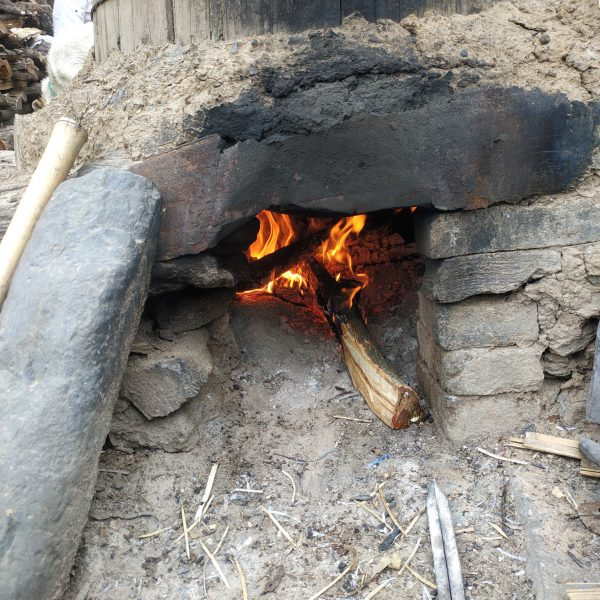
Formation and Characteristics of Heartland
1. Formation process: The “thousand hammers and hundreds of trials” in the stove
Imagine a traditional rural firewood stove, which is an old stove built with stones and soil to burn firewood and straw for cooking. Day after day, year after year, even decades, this stove has never truly cooled down. Every day, I start a fire to cook, and the blazing flames lick the bottom and inner walls of the stove. The temperature is frighteningly high (just imagine how hot the charcoal fire is!).
The materials used for laying or building stoves in the stove are originally ordinary loess or clay, just like the mud we step on. However, its location is too special – it is in the core area where the stove fire is intense and the heat is long-lasting.Fulong liver
The test of fire: The high temperature generated by burning firewood is not a joke. It continuously and repeatedly baked this piece of soil. Organic things like grass roots and dead insects in ordinary soil have long been burned clean in this environment, leaving no smoke behind.
High temperature “shaping”: This is not the key yet. Think about burning bricks and pottery! Soil undergoes magical changes under high temperatures. The soil in the center of the stove is the same. Under years of high temperature roasting (this heat is not burned all at once, but rather simmers slowly over low heat, but at extremely high temperatures), the tiny particles in the soil begin to “melt” and cool, as if they have been “kneaded” again by an invisible force, and the particles are tightly bound together.
Smoked and flavorful: Burning firewood not only brings heat, but also thick smoke. These smoke and combustion gases also wrap and permeate this soil day and night. Some volatile substances were taken away and left marks in the soil.Fulong liver
Time “precipitation”: The process of “burning and smoking” is not just a day or two, but several years, ten years, or even decades! Just like an old monk meditating and practicing by the alchemy furnace, this piece of soil has undergone a long process of “fire refining” in the natural “alchemy furnace” of the stove.
Final result: After such a “thousand trials and tribulations”, this originally soft, ordinary, and easily melted soil has been completely transformed! When it is taken out of the stove, it has already turned into what we call stove core soil (Fulong liver) – its color has become like burnt red bricks, darker and darker, close to deep reddish brown or reddish brown; The texture becomes hard, dense, and fragile when knocked; The entire form also shrinks more tightly.
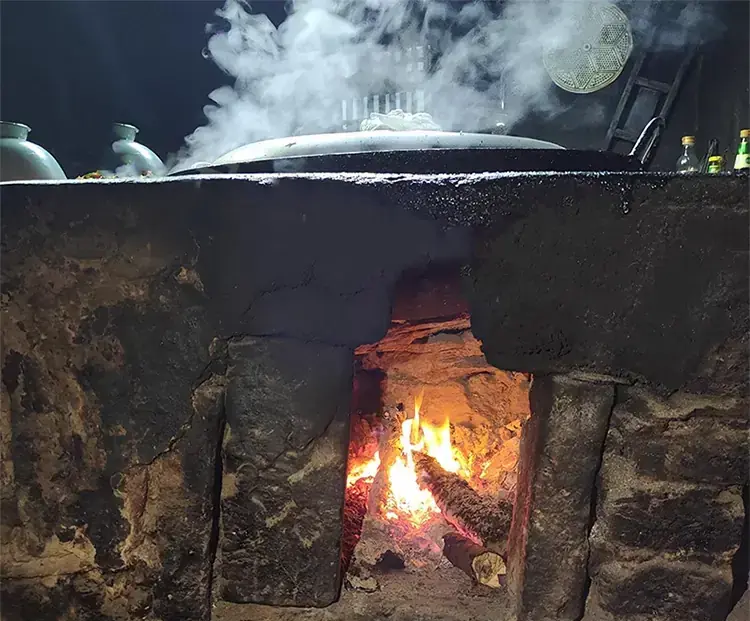
To put it simply: Kitchen soil is ordinary soil. In the hot core of the rural stove, after several to several decades of continuous high temperature burning and smoking, the “old kitchen soil essence”, which is dark red and hard as stone, is finally “refined”. Its formation is a slow and profound physical transformation caused by the combined action of time, fire, and soil.
2. Characteristic: The “hard power” bestowed by the raging fire Fulong liver
Compared to its original appearance (ordinary soil), the Hearthstone that has been “cultivated” by the stove fire is simply two different “soils”. It possesses several visible and perceptible physical properties:
1. The color has changed significantly: it is no longer yellow or gray. Its color is very dark, with a burnt deep reddish brown, ochre color, and even a hint of shiny black. This is a profound imprint left by long-term high temperature and smoke, and also a prominent symbol of it.Fulong liver
2. Hard texture: Ordinary soil will scatter when squeezed and turn into mud when exposed to water. Hearthstone is different! It is extremely hard and dense, heavy in the hand, like a small stone. This is because the high temperature has already “welded” the soil particles tightly.
3. The whole body is covered in “pores” (porous): Although it appears hard on the surface, if you have a microscope, you will see that it is actually filled with dense and extremely small pores and pores inside. This is the “tunnel network” left behind by the burning of organic matter and the escape of gases during the combustion process. This endows it with an important ability – strong
adsorption power! Just like activated carbon or sponge can absorb water and odors, these countless tiny holes make the stove core soil particularly good at “grasping” and accommodating some things (such as fine impurities in water, certain gas molecules, etc.). The ancients may have observed that using it to clarify water is particularly effective, which is why.
4. High temperature resistant “veteran”: It is refined in flames, so it has a natural “resistance” to high temperatures and is not afraid of being burned again (of course, the temperature cannot exceed its original limit).Fulong liver
Summarize its core features:
The prominent feature of the stove core soil is its striking deep reddish brown appearance, hard and dense texture, and the super strong adsorption ability brought by its internal structure resembling a microporous sponge. These tangible, tangible, and measurable physical properties are the key to distinguishing it from any ordinary soil, and also the physical basis for its attention and utilization in history. It is essentially a special “sintered soil” with a physical structure deeply modified by a rural stove fire

2.
Overview of Features
After a long period of “cultivation” on the stove fire, the Hearthstone has undergone a complete transformation compared to its ordinary appearance, possessing several tangible and visible “household skills” (physical characteristics):
Unforgettable appearance at a glance:
The color is deep: what stands out is the “Fire Refining Red Robe”! It’s no longer the yellow or gray of the soil, but rather like a burnt brick, presenting a deep brownish red, reddish brown, and even a hint of black luster. The “skin color” of this body is the profound imprint left by it being “kissed” by flames and “smoked” by thick smoke in the stove for years. You can imagine it as an “old pottery piece” deeply baked by nature (stove fire).Fulong liver
Significant changes in texture and structure:
Hard as stone, dense and steady: Weighing it in your hand, it feels heavy and full of weight. Pinch hard with your fingers? Not moving at all, as hard as a small stone! Knocking with a hard object will produce a crisp “jingle” sound, rather than the dull sound of ordinary soil. This is because the high temperature melts countless tiny particles in the soil, like burning bricks and ceramics, and then tightly “welds” them together, making the structure exceptionally tight and sturdy. Soaking it in water, it will also scatter and melt like ordinary soil, very “bubble resistant” and highly stable.Fulong liver
Although there are few pores, the key is that although it appears hard and dense on the surface, unlike sponges that are fluffy, under a microscope, its body still hides some very small holes and gaps (not as large and numerous as ordinary soil). These ‘small pores’ are left behind after impurities and gases in the soil escape during the combustion process. Don’t look at Kong Xiao, they are the “secret passage” of an important ability in Heartland.Fulong liver
Practical ‘hard skills’:
Thermal insulation expert: Because the structure is very compact, heat is not easily lost, and the ability of the stove core soil to store heat is quite good. Think about the hot stove core soil just dug out of the stove, it can stay warm and cozy for a while. The ancients may have utilized this and used it in places that require insulation (such as certain traditional crafts).
Heat resistant ‘old martial arts’: This skill is its old profession of’ cultivation ‘! It was refined in high temperatures and flames, so for ordinary heating, it remains calm and resistant, and will not easily crack or change its properties (of course, the temperature cannot exceed its original limit).Fulong liver
There are “tricks” to adsorption: the tiny “pores” mentioned earlier give the core soil a certain ability to “grab things” (adsorption). Although not as strong as activated carbon, it can absorb some water, oil, or slowly make turbid water clearer (by “grabbing” and sinking fine impurities suspended in the water). The ancients probably began to value it because they observed that it could make turbid water clear or felt that it was gentle and non irritating when in contact with it.
Its’ foundation ‘(ingredient basis):
Ultimately, the heart of the stove is made of soil. After such a long period of high-temperature burning, the organic things inside, such as grass roots and leaves, have long been burned away. What remains is mainly the “durable” mineral “skeleton” in the soil, such as quartz sand and various metal oxides. These components are forged at high temperatures to become purer and more stable. Moreover, because it is formed in an environment where firewood is burned, some alkaline substances (such as plant ash) in the ash also melt into it, so when touched or soaked in water, it feels slightly smoother or less acidic than ordinary soil (overall properties tend to be mild and stable).Fulong liver
Summarize its core “skills”:
The prominent features of the Hearthstone are its striking deep reddish brown “fire refined” exterior, its hard, dense, and stable “body” like a stone, and its small internal “pores” that give it a certain degree of adsorption ability. These tangible characteristics that can be felt with the eyes, touched with the hands, or even through simple experiments such as tapping, soaking in water, or clarifying water are the key signs of its “standing out” from ordinary soil, and also the physical basis for its discovery and utilization in history. It is essentially a special “sintered soil” that has been deeply transformed into a structure by rural stoves.

Folk customs and beliefs
Zaoxintu (Fulonggan), this “old stove soil” born from rural fireworks, has significance far beyond its physical properties. In many places’ local memories and traditional customs, it is also endowed with profound cultural emotions and spiritual symbols, serving as a small bridge connecting daily life and spiritual beliefs.Fulong liver
Guarding the ‘Fireworks Mark’ of Homeland:
In some local customs, people believe that this piece of soil, which has been tempered by a stove fire for a long time, embodies the “fireworks” of the family and the “warmth” of life. When building a new house or engaging in important family activities such as marriage or childbirth, the older generation may deliberately take a small amount of stove core soil from the old stove
and carefully sprinkle it on the corners of the new house, under the threshold, or press it on the four corners of the bed. This is not for the actual “exorcism” effect, but more like a symbolic ceremony – bringing the warmth, tranquility, and continued “fireworks” of the old house to a new living space, expressing the beautiful wish for a stable and prosperous home life. This piece of soil has become an emotional symbol for the protection and inheritance of our homeland.
The superstitious legend of worshipping the Kitchen God as a “symbol of goodwill”:
In superstition, it is said that Zao Wangye (Zao Shen) is a very important household god in Chinese folk beliefs. Legend has it that he “speaks of good things in heaven and ensures peace in the lower world”. The stove chamber is the “residence” of the Kitchen God. Therefore, as the “heart” of the stove, the Heartland is naturally regarded as closely related to the Kitchen God in some local customs.Fulong liver
Especially in the traditional Small Year (23rd or 24th of the twelfth lunar month) Kitchen Worship Ceremony, in addition to offering sweet melons (sticking to the mouth of the Kitchen God to encourage him to speak well) and fresh water cooking beans, some places also respectfully place a small piece of clean stove core soil on the stove or beside the shrine. This does not directly “represent” the Kitchen God, but rather expresses respect for the Kitchen God’s “residence”, symbolizing prayers for the continuous burning of the stove, the prosperity of the home, and the abundance of life. This piece of soil carries people’s admiration for the Kitchen God and their simple expectations for future life.Fulong liver
A ‘local token’ that expresses emotions:
For those who have left their hometowns or are deeply attached to their old homes and past lives, a piece of land from the old stove in their hometown may be a precious “local token”. It embodies the fireworks of hometown, childhood memories, and the scent of home. Cherish it, touch its hard and warm texture, as if you can touch the passing years and the strong nostalgia. This piece of soil has become an emotional bond connecting the past and present, as well as the distant land and hometown.
The customs and differences between the North and the South:Fulong liver
Different regions have different customs. In addition to the common practices mentioned above, there are also more interesting customs in some places:
Blessing of “pressing the bottom of the box”: When a daughter gets married, the mother may place a small piece of heartwarming soil at the bottom of the dowry box, symbolizing bringing the “foundation” and “warmth” of the family to the daughter, wishing her a stable and prosperous life in her new home.Fulong liver
The ritualistic feeling of “peaceful soil”: When moving, in addition to carrying rice and grain, some places also bring a piece of soil from the old stove. When arriving in a new place, it is first placed in the kitchen, symbolizing the “family god” and the good fortune of the old house “invited” to the new house, praying for a smooth continuation of life.
Summary
The application of Zaoxintu (Fulonggan) in folk customs does not stem from a “functional” dependence on its physical properties, but from its central position in agricultural family life and the characteristics of its formation process. It is a witness to the never-ending stove fire, a symbol of family warmth, and a medium of emotional connection between people and the household
(Kitchen God) through superstitions and legends. These superstitious customs are filled with people’s beautiful wishes for a peaceful home, smooth life, and the continuation of incense, as well as their deep attachment to traditional ways of life. It comes from the stove and eventually blends into the spiritual world of the people, becoming a cultural memory and emotional attachment with warmth in the world of fireworks. This belief and emotion derived from daily life gives a seemingly ordinary ‘old stove’ a cultural weight that transcends time.Fulong liver