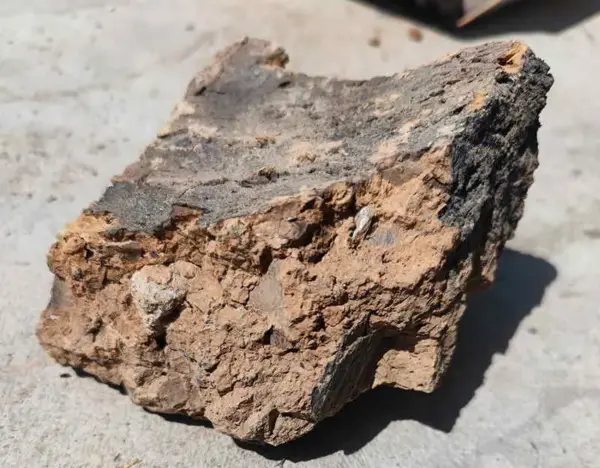
The Chinese honeybee, a protected native subspecies, demonstrates superior adaptability across diverse climates and terrains in China. Its honey quality is influenced by altitude, latitude, and climate, leading to high Baume degrees and unique flavors from diverse nectar sources.
Compared to the Italian honeybee, the Chinese bee has stronger disease resistance and utilizes more scattered nectar sources, producing honey with higher pollen content and enzyme activity. Its thorough brewing process yields mature honey with enhanced nutritional and bioactive properties.
Table of Contents
The influence of living environment and geographical distribution on Chinese honeybee quality
The Chinese honeybee, commonly known as the medium bee or the local bee, is the main subspecies of Apis cerana in China and has been listed as a national protected breed of livestock and poultry genetic resources by the Ministry of Agriculture. As a key pollinator of mountain forest communities and traditional agriculture in China, the Chinese honeybee plays an irreplaceable role in maintaining ecological balance and promoting crop production. Compared with the widely farmed Italian honeybee,
the Chinese honeybee has stronger environmental adaptability, disease resistance, and efficiency in utilizing scattered nectar sources, but its population size accounts for only about one-third of the total bee colonies in China (approximately 2 million colonies).
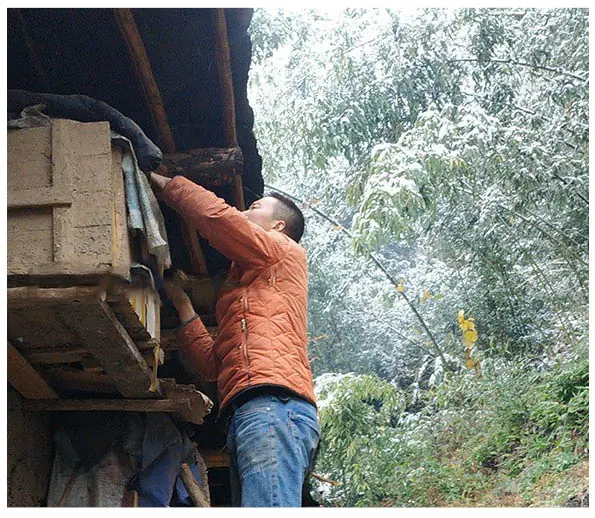
The vast geographical environment of China provides diverse living spaces for the Chinese honeybee. From the southeastern coast to the Qinghai-Xizang Plateau, the Chinese honeybee is distributed across 30 provinces, autonomous regions, and municipalities directly under the Central Government. It ranges from the Songshanling Mountains in Heilongjiang Province in the
north, to Wuwei in Gansu Province and Leda in Qinghai Province in the northwest, to Motuo in the middle and lower reaches of the Yarlung Zangbo River in the southwest, to Hainan Province in the south, and to Taiwan Province in the east. This extensive distribution range enables the Chinese honeybee to adapt to five climate zones from tropical to cold temperate, as well as four types of regions: humid, semi-humid, semi-arid, and arid.
Synergies between altitude and continental plates
The altitude gradient and the complex terrain shaped by the movement of the Eurasian Plate jointly influence the morphological characteristics and honey quality of the Chinese honeybee. The research has found that as the latitude moves northward, the altitude increases, and the annual average temperature decreases, the body size of the Chinese honeybee gradually becomes larger and its body color becomes darker. This morphological adaptive change is closely related to its foraging behavior and production performance. Especially in the regions of the Himalayas and the Yunnan-Guizhou Plateau, the altitude changes occur rapidly within a short period of time, forming unique vertical climate zones, which enables the same area to produce honey with various distinct flavors.
The interaction between the Eurasian Plate and the Pacific Plate not only shaped the topographic gradient of China from high in the west to low in the east, but also indirectly regulated the flowering phenology of nectar-producing plants through its influence on the monsoon system and ocean current paths. For instance, the variation of the Kuroshio Current would affect the temperature and precipitation in the eastern coastal areas of China, thereby altering the nectar flow periods of nectar-producing plants such as lychee and longan. This cascade effect of climate – plants – bees ultimately manifests in the chemical composition and physical properties of honey.

The relationship between Bomeide and environmental factors
The degree of sweetness (°Bé) is a crucial indicator for measuring the concentration and maturity of honey, directly reflecting the moisture content and preservation potential of the honey. The degree of sweetness of Chinese honey bees’ honey is generally high, which is closely related to their living environment and behavioral characteristics:
The influence of climate aridity: In the arid regions of northern China, the Chinese honeybee undergoes secondary sealing of the honeycomb, further reducing the moisture content of the honey.
The role of foraging behavior: The Chinese honeybee leaves the hive earlier and returns later than the Italian honeybee. It spends 2-3 hours more foraging each day. This extended working time allows for a more thorough enzymatic conversion of nectar in the honeybee’s stomach, and subsequently, through forced air ventilation in the brood cell, accelerates the evaporation of moisture.
Honey source diversity effect: The Chinese honeybee can utilize 129 types of honey-producing plants, significantly more than the 27 types utilized by the Italian honeybee. This extensive selection of honey sources not only increases the nutritional complexity of honey but also influences the final sugar composition and concentration through the mixture of different nectar sources.

Morphological characteristics and life cycle
Under long-term natural selection, the Chinese honeybee has developed a morphology and life history strategy that are highly adapted to its living environment. Worker bees are only 10-13 millimeters in length, male bees are 11-13.5 millimeters, and the queen bee is 13-16 millimeters. This relatively small size enables them to fly more agilely in mountainous forests and effectively avoid predators such as wasps. It is worth noting that the southern populations are usually smaller than the northern populations, which may be an adaptation to thermodynamic efficiency – a smaller body size is more efficient in dissipating heat in warm environments.
In terms of the life cycle, the lifespan of worker bees of the Chinese honeybee is approximately 200 to 300 days. However, their reproductive strategy has unique features. The queen bee lays about 1,000 eggs per day, which is much lower than that of the Italian honeybee (more than 2,000 per day). This lower reproductive rate is adapted to the smaller colony size and limited environmental carrying capacity of the Chinese honeybee. Nevertheless, the reproductive cycles of the three types of bees (workers, males, and queens) of the Chinese honeybee are shorter, enabling them to complete the generation replacement more quickly, which is of great significance in mountainous areas with variable climates.

Quantitative Analysis of Collection Behavior and Work Ethic
Diligence level is the core indicator for measuring the efficiency of bee foraging. The Chinese honeybee demonstrates significant advantages in this regard. Behavioral observations show that the peak period of the Chinese honeybee’s daily attendance is at 10:00 in the morning, which is one hour earlier than that of the Italian honeybee (11:00). This timing is different from that of wasps, effectively reducing the risk of being preyed upon. More importantly, the Chinese honeybee has a special habit of conducting surprise foraging in the early morning and late afternoon. This time utilization strategy enables it to fully utilize the peak period of nectar secretion during the low-temperature hours.
In terms of foraging ability, the Chinese honeybee demonstrates an outstanding ability to make efficient use of scattered nectar sources. They have a keen sense of smell and can locate and collect low-growing shrubs and herbaceous plants that bloom sporadically, such as those in the cruciferous, rose, and oak tree families. This “broad-spectrum foraging” strategy contrasts sharply with the “specialized foraging” approach of the Italian honeybee – the Italian honeybee tends to prefer large-scale, centralized nectar sources, but will stop foraging when the weather is unfavorable and requires artificial feeding with sugar water.
Systematic comparison with Italian bees
The differences between the Chinese bee and the Italian bee extend beyond their physical appearance and behavior, and extend to multiple aspects such as ecological niche differentiation and product characteristics:
Adaptability and disease resistance: The Chinese honeybee has a significantly stronger ability to adapt to low-temperature environments. It can leave the hive to collect nectar when the temperature is above 6℃, while the Italian honeybee requires a higher temperature threshold. In terms of diseases, the Chinese honeybee has a strong resistance to varroa mites and American foulbrood, but is prone to infection with the brood disease of the European honeybee and wax moth damage. The Italian honeybee faces more pest and disease problems, including American foulbrood, chalkbrood, and varroa mites.
Differences in honey quality: Pollen analysis reveals the fundamental distinctions between the two types of honey. The absolute pollen concentration of Chinese honey reaches 15,500·g⁻¹, significantly higher than that of Italian honey at 10,100·g⁻¹. This high pollen content not only gives Chinese honey a more complex flavor, but also indicates a higher nutrient density and diversity of phytochemicals. Moreover, Chinese bees do not produce propolis, so the floral aroma of their honey is purer and less affected by the propolis odor.
Comparison of production characteristics: Italian bees are renowned for their high productivity. In a honey-producing season, one hive can collect 35 kilograms of honey, while the annual output of Chinese bees is only about 10 kilograms. This difference in production volume reflects the different survival strategies of the two types of bees – Italian bees achieve high productivity through large-scale collection, making them suitable for commercial farming; Chinese bees, on the other hand, produce higher-quality but limited quantities of honey by efficiently utilizing multiple sources of nectar.
Contribution to pollination of crops
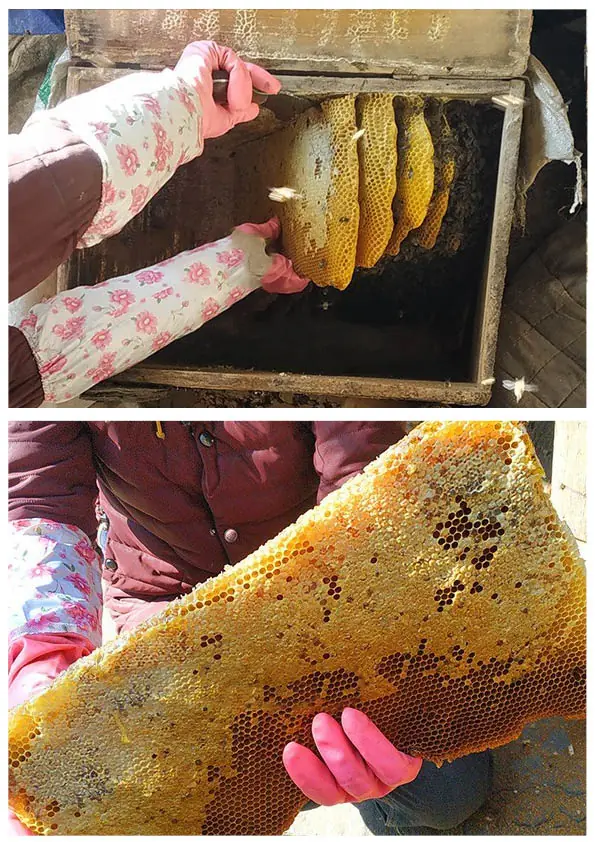
As a native pollinator, the Chinese honeybee plays a unique and irreplaceable role in crop pollination. Research has shown that in the pollination of pear trees, the Chinese honeybee exhibits more stable foraging behavior, and there are no significant changes in foraging preferences throughout the flowering period. This continuous and stable flower-visiting pattern is of great significance for ensuring uniform pollination and fruit quality.
In terms of ecosystem service value, the pollination activities of the Chinese honeybee have a significant yield-increasing effect on various crops. This virtuous cycle of “planting of nectar sources – bee pollination – ecological improvement” reflects the core value of the Chinese honeybee in ecological agriculture.
Main nutrients and bioactives
Honey is a naturally sweet substance with an extremely complex composition. Its chemical composition is influenced by multiple factors such as the species of bees, the source plants of the honey, the geographical environment, and the collection season. The honey produced by the Chinese honeybee has the following notable characteristics:
Carbohydrate composition: In Chinese honey, fructose and glucose account for over 85% of the total sugar content, while the content of sucrose is extremely low (usually less than 1%). This high proportion of reducing sugars not only makes honey more easily absorbed by the human body, but also reduces the tendency to crystallize. It is worth noting that since Chinese bees do not rely on artificial feeding, their honey contains almost no exogenous sucrose, which contrasts with some Italian honey that may contain residual feed syrup.
Enzyme system activity: The enzymes in honey mainly come from the salivary glands secretions of bees, including amylase, glucose oxidase, peroxidase, etc. The enzyme activity in Chinese honey is usually higher, which is related to their longer brewing time and multiple processing steps. These enzymes not only participate in the maturation process of honey, but also give honey certain antibacterial properties and health benefits.
Trace Elements and Vitamins: The nectar-producing plants in mountainous areas usually grow in soil rich in minerals, which makes Chinese honey contain a considerable amount of trace elements such as potassium, calcium, magnesium, and zinc. Additionally, due to the diversity of the plants collected, the honey also has relatively abundant contents of vitamin B and vitamin C. Although these trace nutrients are not high in quantity, they may have positive effects on health when consumed over a long period.
Polyphenolic compounds: As the most important bioactive components in honey, polyphenols include flavonoids and phenolic acids, etc. The various wild flowers collected by the Chinese honeybees often contain high levels of polyphenols. During the honey-making process, some of these substances are transferred to the honey, endowing it with antioxidant, anti-inflammatory and antibacterial properties. Studies have found that the antioxidant capacity of certain Chinese honey is 2-3 times that of ordinary Italian honey.
The complete natural brewing process
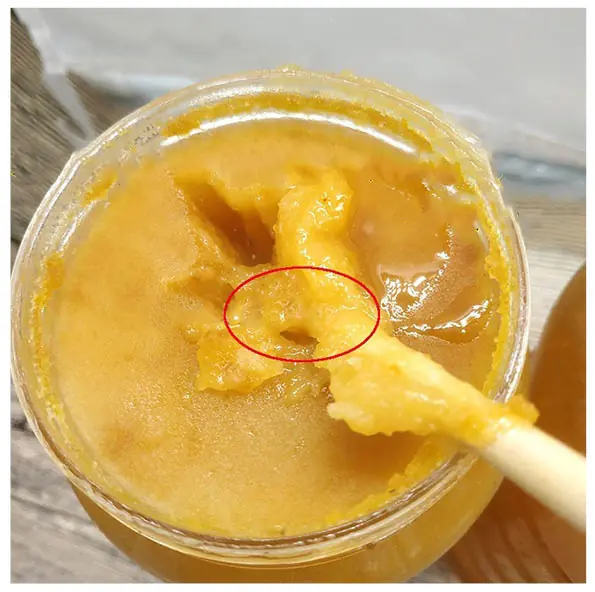
The production of honey is a complex biological transformation process that involves a series of behavioral activities and biochemical reactions of bees:
Nectar collection stage: Worker bees use their rasping mouthparts to suck up nectar and temporarily store it in the honey stomach. On their way back to the hive, enzymes in the honey stomach have already begun to break down sucrose into fructose and glucose.
Initial transfer and processing: The forager bee conveys nectar to the house bee, which then mixes the enzymes secreted by the salivary glands with the nectar through repeated swallowing and expelling actions. This process not only accelerates the conversion of sugars but also reduces the moisture content through evaporation.
Nest comb storage and maturation: The processed honey liquid is placed in the honeycomb cells, and the bees accelerate the evaporation of water through the fan behavior. The Chinese honeybee has a unique secondary sealing habit – after the initial sealing, it will crack the seal and re-thrust the honey through the process of fermentation, and then perform the final sealing. This “double fermentation” mechanism makes the honey more mature and has a higher Baumé degree.
The entire process of chemical change: Throughout the brewing process, the pH value of honey gradually decreases (from 7.0-7.5 in nectar to 3.5-4.5 in mature honey), mainly due to the production of gluconic acid by glucose oxidase. The acidic environment not only inhibits microbial growth but also protects the heat-sensitive components in honey.

Scientific significance and quality control of Bomet Bomedo
The Baumé degree, as an international standard indicator for honey concentration, has a clear mathematical relationship with moisture content: Baumé degree = 145 – 145 / relative density. In China’s national standards, grade one honey is required to have a Baumé degree of above 41.6 degrees (with moisture content ≤ 20%). Due to thorough brewing, honey produced by the Chinese honeybee often exceeds this standard, reaching 42-43 degrees. —–>Go and buy Chinese honey
A high specific gravity not only indicates a lower water activity (Aw < 0.6), thereby inhibiting the growth of yeast and bacteria, but also reflects the maturity and storage stability of the honey. Studies have shown that for every 1 degree increase in specific gravity, the shelf life of honey can be extended by 6-12 months. This is why standardized Chinese beekeeping requires that the honey’s specific gravity must be above 42 degrees before it can be harvested.
Scientific consumption methods and frequency suggestions
Honey, as a natural food, should be consumed in accordance with scientific principles to maximize its health benefits:
Best consumption time: Take one tablespoon (approximately 15-20 grams) of honey on an empty stomach in the morning. Mix it with warm water for consumption. This helps to clean the intestines and provide morning energy. Consuming it in moderation before bedtime can stimulate the secretion of melatonin and improve sleep quality.
Key points for temperature control: The water temperature for brewing honey should be maintained between 40-60℃. Excessive heat can destroy the enzyme activity and heat-sensitive nutrients in the honey. Research shows that when the water temperature exceeds 70℃, the activity of starch enzymes in honey drops by more than 50% within 30 minutes.
Appropriate population and dosage: For healthy adults, the recommended daily intake of honey is 25-50 grams, which is equivalent to 2-3 tablespoons. For physically active individuals, athletes, or those with mental workloads, the dosage can be increased to 50-70 grams. The dosage for children should be halved. Infants under 1 year old should not consume honey as their intestinal flora have not yet fully developed, and they may have adverse reactions to the trace amounts of botulinum spores in honey.

Contraindicated people and precautions Ecological adaptability
Although honey is a natural and healthy food, the following groups of people need to be cautious or avoid consuming it:
Diabetic patients: Although the glycemic index (GI value, approximately 55) of honey is lower than that of white sugar (GI value approximately 65), it still contains a large amount of simple sugars. If diabetic patients need to consume honey, they should do so only when their blood sugar levels are stable, with no more than 15 grams per day, and this amount should be included in their total daily carbohydrate intake.Ecological adaptability
Infants under one year old: Honey may contain botulinum spores. The infant’s intestines lack competitive bacterial colonies that can inhibit the growth of this bacterium, which may lead to infant botulism. This is a clear prohibition issued by global public health agencies.
Fructose intolerance sufferers: A small number of people have hereditary fructose intolerance, lacking the aldolase B enzyme necessary for metabolizing fructose. Consuming honey may lead to severe hypoglycemia and liver damage.
People with allergic constitution: Those allergic to pollen may have cross-allergic reactions to certain single flower varieties of honey. It is recommended to try a small amount of the new honey type for the first time, observe for 24 hours without any abnormalities, and then consume it normally,Bomedo