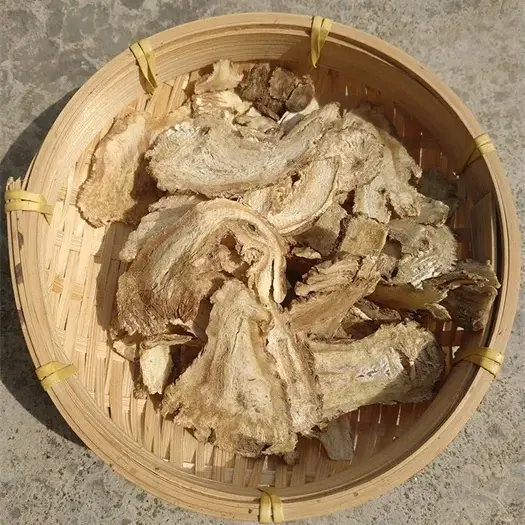
Atractylodes macrocephala
Wild Atractylodes macrocephala, as a perennial herbaceous plant, occupies a place in the field with its extensive medicinal and edible value. Atractylodes macrocephala grows mostly in the grasslands and understory of mountain slopes in Jiangsu, Zhejiang, Fujian, Jiangxi, Anhui, Sichuan, Hunan, Shaanxi and other places in China. Light, climate and appropriate rainfall
contribute to its quality. The climate conditions in these areas are mostly cool and humid, with moderate daily light hours, providing a good natural environment for its growth.
1、 The growth environment of wild Atractylodes macrocephala tablets
Wild Atractylodes macrocephala prefers a cool and humid climate, is drought resistant and cold resistant, but not resistant to high temperatures. They grow in forests, valleys, grasslands and other places, and by absorbing the essence of nature, they breed rich values. Atractylodes macrocephala has strong adaptability and can survive in various soil environments, but prefers fertile and well drained soil.
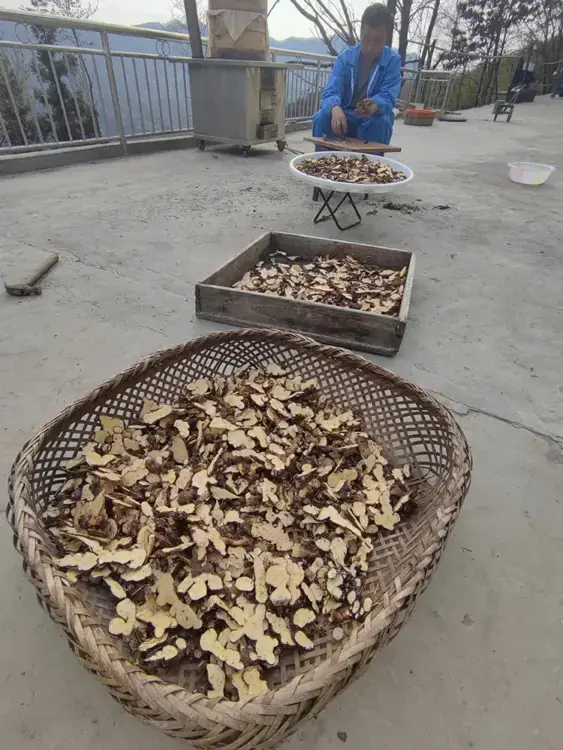
Excavation and Preliminary Processing of Wild Atractylodes macrocephala Tablets
Refining the timing of harvesting: Choose to harvest between frost and the beginning of winter (around October to November in the lunar calendar). At this time, the stems and leaves of the above ground plants of Atractylodes macrocephala begin to wither and turn yellow or brown, indicating that the growth and accumulation of its underground rhizomes have been completed, and the internal substances are relatively abundant. At this time of excavation, the roots and stems are full and the texture is solid.
Key points of excavation operation:
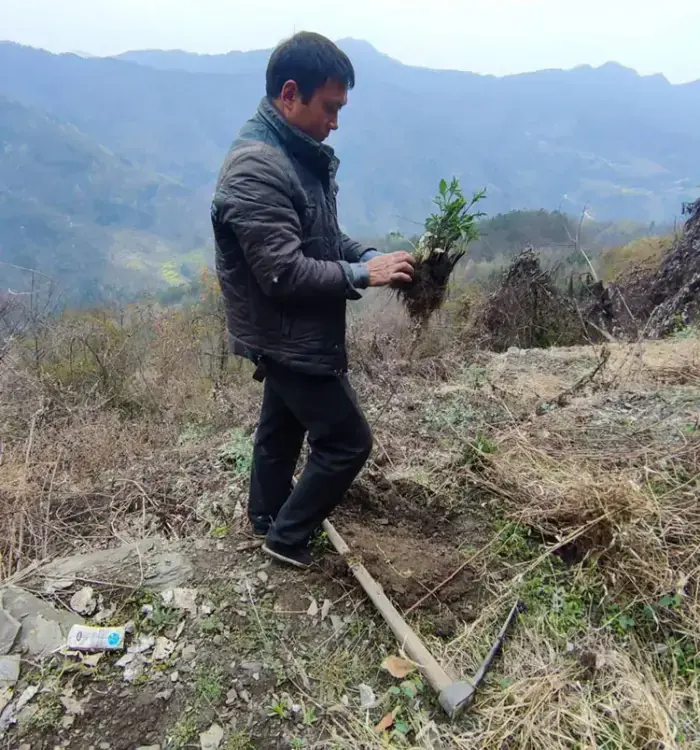
Cleaning the site: Carefully remove weeds, shrubs, branches, leaves, and surface soil around the roots and stems, exposing the top area of the roots and stems to avoid blind hoeing and damage.
Excavating tools: use a narrow medicine hoe or a small shovel.
Excavation method: Starting from a certain distance (about 15-20 centimeters) around the plant, carefully excavate from outside to inside and from shallow to deep. The movements should be gentle and careful, with the aim of digging out the entire rhizome as completely as possible and reducing root breakage and skin abrasions. Especially for Atractylodes macrocephala with longer growth years, its rhizomes may be larger and forked, requiring more patience.
Remove the rhizome: When most of the rhizome is exposed, gently lift and shake off the attached soil with your hands or tools to remove the intact rhizome. Avoid forcefully pulling the stems and leaves, which may cause the roots and stems to break.
Post harvest field treatment:
Remove the aboveground part: Immediately use a knife (avoid iron tools, traditionally use bamboo or copper knives) to approach the top of the rhizome and cut off any remaining withered stems and leaves.
Preliminary cleaning: Gently shake or brush off most of the loose soil and sand adhering to the roots and stems in the field. Avoid rinsing with water to prevent increasing moisture and hindering subsequent drying.
Sorting and protection: Carefully place the excavated roots and stems into breathable baskets (such as bamboo baskets or wicker baskets) to avoid excessive accumulation and crushing damage. Pay attention to protecting the surface of the roots and reduce collisions.

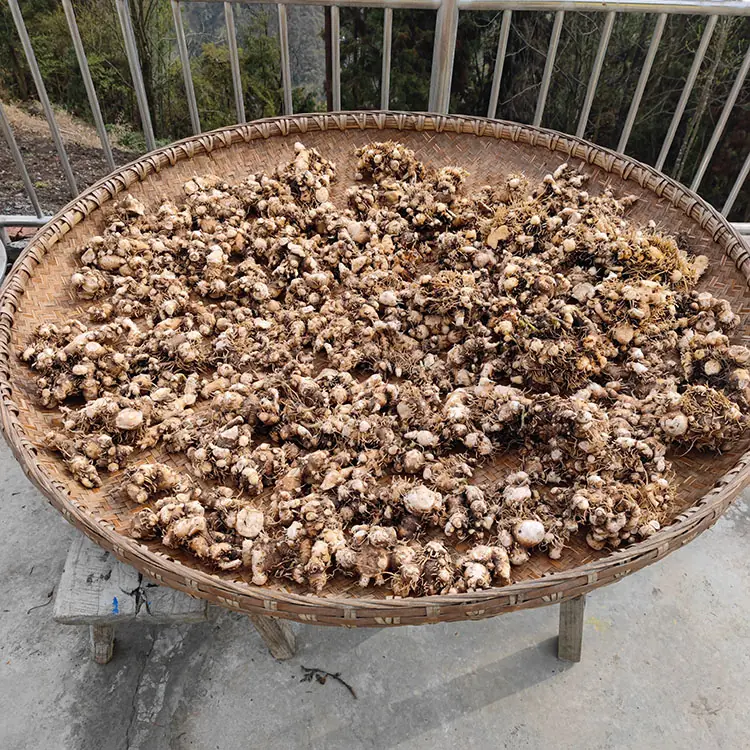
Processing of rhizomes: towards’ Atractylodes macrocephala tablets’
The fresh roots and stems of Atractylodes macrocephala (known as “raw Atractylodes macrocephala” or “fresh Atractylodes macrocephala”) after excavation and initial cleaning need to undergo a series of processing to become common “Atractylodes macrocephala slices”. The main steps include:
Further cleaning:
After transporting the fresh techniques back to the processing site, conduct a more detailed cleaning.
Use a soft bristled brush or coarse cloth to further remove roots, fine sediment, and residual stem base in a dry state. Still avoid washing with water.
Grading and selection:
Classify according to the size, thickness, morphology (whether forked), and completeness of the rhizome.
Remove individuals that are significantly damaged (broken, insect infested, moldy) or too small.
Drying (core steps):
Purpose: To significantly reduce the moisture content of roots and rhizomes, making them harder in texture, less prone to decay and mold, and easier to store, transport, and subsequently cut.
Traditional method – sun drying:
Choose continuous sunny, dry, and well ventilated weather.
Spread the cleaned and graded fresh herbs evenly on clean bamboo mats, reed mats, or sun drying fields.
During the day, expose to direct sunlight, and at night, retract or hang in a well ventilated area (avoiding rain and dew).
Frequent flipping is required to ensure even drying and prevent the sunny side from drying and cracking while the shaded side remains dry, leading to mold growth.
Sun dried until the roots and stems are completely dry, hard, and easily breakable. The skin color darkens (usually yellow brown to dark brown), and the internal cross-section appears light yellow or yellow white, with a solid texture. This process takes a long time (several days to several weeks).
Modern Method – Drying:
Used during bad weather or large-scale production.
Place the fresh technique in the drying room or dryer.
Strictly control the temperature (usually starting at 35-40 ° C, and later slightly rising to below 50 ° C) and ventilation.
Frequently flip to prevent uneven heating or excessive temperature from causing surface coking or internal “sugar core” (not completely dry).
Dry to the same dry and hard state as sun drying. This method has high efficiency, but requires precise control.
Moisturizing and cutting (forming “slices”):
The completely dry rhizome of Atractylodes macrocephala (known as “raw Atractylodes macrocephala”) has a hard texture and cannot be sliced directly. Need to perform “moistening” softening:
Stack the raw Atractylodes macrocephala in a cool and moist place (or spray a small amount of water).
Cover with wet burlap bags or straw mats.
Maintain a certain temperature and humidity, and regularly flip and check.
Moisturize until the moisture inside and outside the roots is even, and the texture changes from hard to flexible (but not too soft), allowing for smooth cutting with a knife. Avoid excessive moistening that can cause mold growth.
Cutting: A moderately moistened Atractylodes macrocephala is sliced longitudinally along the long axis of the rhizome using a slicer or traditional medicine knife to form uniformly thick slices (about 2-4 millimeters thick), known as “raw Atractylodes macrocephala slices”. There are also places where it is customary to cut diagonally or horizontally.
Drying (secondary drying):
The moisture content of the sliced Atractylodes macrocephala will increase, and it needs to be dried again (sun dried or low-temperature dried).
Dry until the tablet is completely dry, hard, and easily breakable, meeting the storage requirements.
Screening and packaging:
Screen the dried Atractylodes macrocephala tablets to remove fragments, partially dried tablets, discolored tablets, impurities, etc.
Classify according to the size, thickness, and color uniformity of the slices.
Seal and package qualified Atractylodes macrocephala tablets (such as burlap bags, plastic bags, cardboard boxes), and store them in a cool, dry, and well ventilated place.

The process from harvesting wild Atractylodes macrocephala to becoming usable ‘Atractylodes macrocephala slices’ is a process that respects natural rhythms, relies on meticulous manual operations, and follows specific processing procedures. The key steps include:
Timely excavation: Based on the condition of the plants on the ground (frost falls to the beginning of winter, stems and leaves wither and turn yellow).
Fine excavation: Strive for the integrity and damage of the roots and stems.
Water avoidance cleaning: Remove soil impurities in a dry state.
Fully dried: sun dried or low-temperature dried until hard (forming “raw white atractylodes”).
Moderate moisture retention: restores toughness for easy cutting.
Standardized cutting: Cut vertically into slices of uniform thickness.
Re drying and repackaging: Ensure stable storage of finished products.
These steps collectively determine the morphological integrity, color, texture (dryness, hardness), and cleanliness of the final white atractylodes tablets, laying the foundation for their subsequent application forms.

3、 Processing of Wild Atractylodes macrocephala Tablets
Fresh Atractylodes macrocephala rhizome (fresh Atractylodes macrocephala) after excavation and initial cleaning needs to undergo specific processing to become “Atractylodes macrocephala slices”. The following are common processing paths based on traditional and modern practices:
Processing path one: first dry the whole and then cut it (mainstream method)
Initial drying – cage baking (traditional method):
Utensils: Use bamboo or rattan baking baskets placed above a heat source (charcoal fire, residual heat from a wood stove).
Operation:
Spread the fresh techniques evenly on the baking basket, with a moderate thickness.
Use low heat to provide stable and gentle heat. Firepower control is crucial to avoid excessive force causing the surface to become burnt while the interior remains wet.
Continuously manually flip to ensure even heating of the roots and prevent local overheating.
Drying degree judgment: Bake until the roots and stems are about 80% dry (i.e. significantly reduced weight, texture changes from crisp and tender to tough, skin wrinkles, but still contains some moisture inside). Stop heating at this time.
Sweat and soften:
Take out the roots and stems that have been dried to 80%, and store them in a cool and sheltered place while they are still hot (such as a bamboo basket or ground covered with straw).
Cover with burlap bags, straw mats, or thick cloth to keep warm and moisturize.
Accumulate for several days (usually 3-7 days). During this period, residual moisture inside the roots and stems gradually seeps outward, causing the originally dry and wrinkled epidermis to reabsorb moisture and become softer, resulting in a more flexible overall texture. This step helps balance internal and external moisture, prevent drying and cracking, and prepare for thorough drying and cutting in the future.
Secondary drying – fine drying:
Place the “sweaty” roots and stems back into a drying facility (roasting cage, drying room, or modern dryer).
Strictly control the temperature between 50-55 ° C.
Continue flipping to ensure even heating.
Drying endpoint judgment: Dry until the roots and stems are completely dry and hard. The standard for empirical judgment is that when flipping or lightly tapping the rhizome, it produces a crisp “clicking” sound and is easy to break, with a uniform light yellow or yellow white cross-section and no dampness. At this time, it is called ‘Sheng Bai Zhu Ge’.
Moisturizing and softening:
Wild Atractylodes macrocephala has a hard texture and needs to be softened before it can be sliced.
Stack it in a cool and humid environment (or spray a small amount of water mist).
Cover with a damp cloth or place in a specially designed moisturizing container.
Moisturize for several days, regularly flip and check until the moisture inside and outside the roots is even, and the texture changes from hard to flexible and elastic, which can be smoothly cut with a knife. Strictly prevent excessive stuffiness from causing heating and mold growth.
Cut into slices:
Use a slicer or traditional medicine knife.
Usually cut longitudinally along the long axis of the rhizome into uniformly thick sheets (usually ranging in thickness from 2-4 millimeters). There are also oblique or transverse cuts, but longitudinal cuts are more common and can better display the internal texture.
After cutting, it is called “Wild Atractylodes macrocephala slices (baked)”.
Drying (optional): If the slices are moistened and cause a slight increase in moisture, they can be dried briefly at low temperature (<50 ° C) or in the shade until the slices are completely dry and hard.
Trimming the beard: After drying, place the Atractylodes macrocephala slices into a specially made bamboo weaving cage or drum, gently roll and collide to remove any remaining fine beard roots and debris. It is also possible to carefully remove the main roots by hand before cutting.

Processing path 2: Cut first and then dry (sun drying method)
Cleaning and cutting:
After further cleaning the fresh technique (removing large pieces of soil and impurities, and selectively manually removing thicker fibrous roots).
Directly use a cutting tool (avoid iron, traditionally use copper or bamboo) to cut vertically into pieces (with the same thickness as before, about 2-4 millimeters).
Drying by sun drying:
Spread fresh Atractylodes macrocephala slices evenly on a clean bamboo mat, bamboo plaque, or reed foil.
Place in a continuously sunny, well ventilated, and sunny (but not extremely exposed) area for natural drying.
Sun dried at night (or moved to a well ventilated and sheltered area), frequently flipped multiple times a day to ensure even drying and prevent adhesion and mold growth.
Drying time: Usually takes 15-20 days or longer, depending on weather, slice thickness, and air humidity.
Drying endpoint: Sun dry until the tablet is completely dry, hard, brittle, and easily breakable, with a natural yellow white to light yellow brown color. At this time, it is called “Sheng Bai Zhu Pian (Sheng Sun)”.
Removing beard roots: If the beard roots are not completely removed before cutting, residual beard roots and debris can also be removed by gently tapping the bamboo weaving basket after drying.
Explanation on drying method (objective statement):
In traditional views, the sun drying method (especially after slicing and sun drying) is believed to maximize the use of natural light and heat and wind power, avoiding the intervention of artificial heat sources.
This viewpoint holds that under ideal weather conditions (continuous clear and ventilated), the finished products processed by sun drying have a more natural color (leaning towards light yellow white), a scent closer to the inherent fragrance of the raw materials, and a relatively crisp texture.
However, the dry baking method (especially referring to improper initial high temperature or temperature control) may result in a darker color (yellow brown), a denser texture, and a slight baking aroma in the finished product.
The core goal of both methods is to achieve sufficient dehydration of roots (or slices) to reach a stable and storable state. The specific physical characteristics of the final product (color, aroma, quality) will be comprehensively influenced by the raw materials themselves, processing method details (temperature, time, flipping), and environmental conditions.
Marking of completed processing:
Regardless of which path is used, qualified “raw Atractylodes macrocephala tablets” should have:
Form: The sheet is complete in shape, with relatively uniform thickness (allowing for some natural differences).
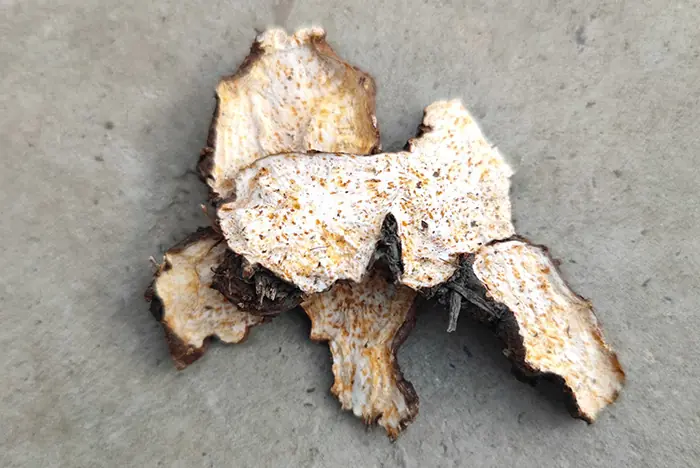
Color: Surface yellow white, light yellow or yellow brown (affected by processing methods), section light yellow or yellow white, visible dark oil spots (cinnabar spots) or texture.
Texture: Dry, hard, and easily breakable.
Cleanliness: No sediment, no significant residue of roots, no mold, no insect infestation.
Odor: It has the unique aroma of Atractylodes macrocephala, which may be strong or weak (the sun drying method may be more fragrant, and the baking method may have a slight baking aroma).
The core processing steps from fresh Atractylodes macrocephala rhizome to “wild Atractylodes macrocephala slices” revolve around drying, dehydration, and morphological preparation (slicing). The main difference lies in the sequence of drying and cutting, as well as the energy source relied on for drying (artificial heat source vs. natural sunlight). The key control points in the process include temperature management (anti scorching), uniform flipping (anti mold, promoting uniformity), moisture control (sweating balance, endpoint dryness), and physical specifications of the final product (sheet thickness, cleanliness). These steps collectively determine the appearance, texture, and storage stability of Atractylodes macrocephala tablets.
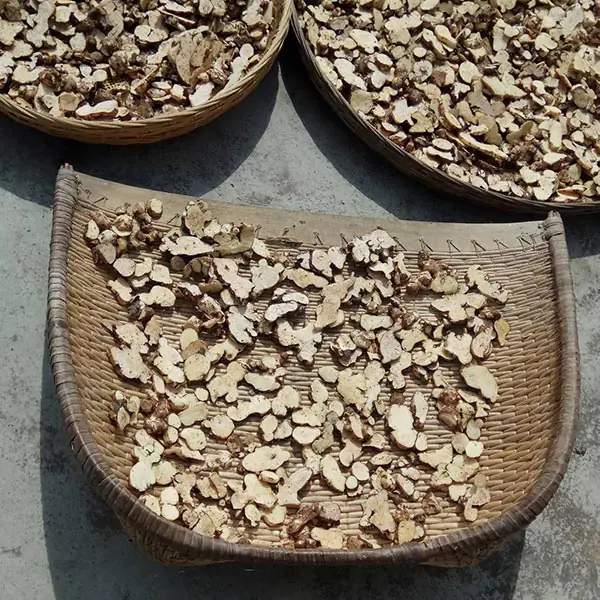
The physical characteristics and influencing factors of wild Atractylodes macrocephala tablets
The physical state and sensory characteristics of wild Atractylodes macrocephala tablets are the result of the combined effects of their specific growth environment, root and stem maturity, processing technology selection, and operational details. These features constitute an important basis for evaluating it as a processed product.
Reflect the typical physical characteristics of its source and processing:
Form and specifications:
Slice shape: usually longitudinally elongated, quasi circular, or irregularly shaped (depending on the original shape of the rhizome and cutting direction). Occasional shallow cracks or bumps on the edges (reflecting branching or surface features of the rhizome).
Thickness: The finished product with standardized processing has a relatively uniform thickness, mostly within the range of 2-4 millimeters. Excessive thickness may result in uneven drying, while excessive thickness can lead to fragility.
Integrity: High quality processing strives for complete sheet shape without significant fragmentation or defects.
color and lustre:
Surface and cross-section: presenting as yellow white, light yellow, or yellow brown. The specific color depth is significantly affected by the following factors:
Processing method: Raw sun dried products usually have a lighter color (leaning towards yellow white), while dry baked products may have a slightly darker color (leaning towards light yellow brown or yellow brown).
Drying degree: The color is stable when fully dried, and areas that are not completely dry may have uneven or easily discolored colors.
Raw material characteristics: growth years and soil composition in the production area may also bring subtle differences.
Characteristic structure: Scattered dark oil spots (commonly known as “cinnabar spots” or “oil chambers”) and radial or circular textures can often be seen in the cross-section or near the epidermis, which are the inherent tissue structure of the rhizome of Atractylodes macrocephala.
Texture:
Hardness and brittleness: The finished product has a hard texture and is easy to break, producing a crisp sound when broken (especially after sufficient drying). This is a direct manifestation of low moisture content.
Texture difference:
Raw sun dried products: Due to the reliance on natural air drying, the texture may be relatively loose and slightly lightly soaked.
Dry baking finished product: Under controlled thermal action, the texture may be more solid and dense.
Odor:
It has a unique aroma of Atractylodes macrocephala, with varying degrees of richness.
The influence of processing methods:
Raw sun dried products: The odor is usually closer to the inherent fragrance of the raw materials, and may have a weak “sun dried” smell.
Dry baking finished product: The odor may blend with the aroma of Atractylodes macrocephala and a slight baking or “fire aroma” (especially when using traditional baking cages).
Cleanliness:
Surface: It should be clean and free of sediment, dust, mold or insect marks.
Root treatment: During the processing (extraction before cutting or collision after cutting), obvious residual roots should be removed.
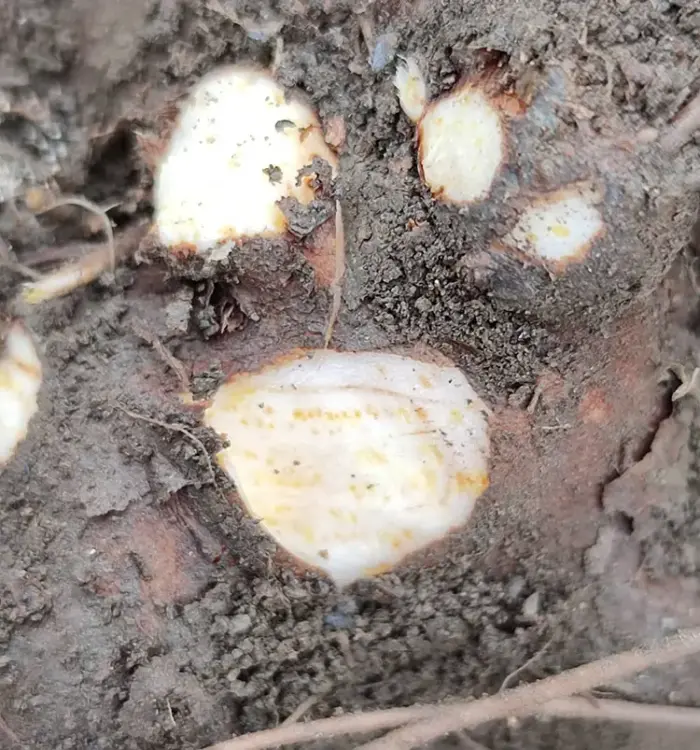
Key factors affecting the characteristics of finished products:
Growth environment and raw material foundation:
Wild environment: The cool and humid climate, moderate sunlight, and fertile and well drained soil in Qinling Mountains and other areas of Shaanxi Province are believed to be conducive to the accumulation of more abundant internal substances in the rhizomes of Atractylodes macrocephala. In terms of physical morphology, it may manifest as thicker, fuller, and more solid rhizomes. This is the basis for obtaining specific qualities through subsequent processing.
Timing of excavation: During the period from frost to the beginning of winter, the roots and stems mature, the material is enriched, and the moisture content is relatively reduced, providing a favorable starting point for processing (especially drying).
Selection and execution of processing technology:
Drying method:
Sun drying method: In ideal and continuous sunny weather, rely on sunlight and natural ventilation to slowly dry. The traditional view is that this method can largely preserve the original physical and sensory characteristics of the raw materials (light color, light aroma, slightly crispy texture). The disadvantages are extreme dependence on weather, long time consumption, and susceptibility to environmental influences (rain, dew, dust).
Drying method: using a controllable heat source (low heat, specific temperature) to accelerate drying. The advantages lie in high efficiency, no weather restrictions, and relatively easy control of drying uniformity. The key lies in precise temperature control (preventing burning) and diligent flipping (preventing uneven heating). Different heat sources (charcoal fire, electric heating) and temperature curves can affect the final color and odor.
The “sweating” step (baking path): This step is crucial for balancing the moisture inside and outside the rhizome, preventing dryness and cracking, and promoting uniform transformation of internal substances, directly affecting the texture uniformity and integrity of the slices.
Cutting technology: The degree of tightness, sharpness of the cutting tool, and cutting technique affect the regularity of the shape, uniformity of thickness, and degree of edge damage.
Removing the need for repair: affects the cleanliness and appearance of the finished product.
Summary:
The physical characteristics of wild Atractylodes macrocephala tablets (form, color, texture, odor, cleanliness) are a concrete manifestation of the combination of their wild origin and artificial craftsmanship. Its presentation state deeply depends on:
The incubation of specific mountainous environments (such as the temperature and humidity conditions and soil of Qinling Mountains).
Mature raw materials obtained through timely excavation.
The selected processing path (sun drying vs. baking) and its strict and precise execution process (temperature control, flipping, sweating, cutting, and beard removal).
Ideal weather conditions (especially for sun drying methods).
These factors work together to shape a “Atractylodes macrocephala” with distinct characteristics and stable storage. Recognizing these associations helps to understand the differences in sensory performance of different products and focus on their physical properties as traditional processed ingredients.
-
In traditional dietary applications, Atractylodes macrocephala tablets demonstrate their flexibility in integrating into daily life
Boiling soup:
Put dry Atractylodes macrocephala slices (usually several grams to over ten grams) into a pot along with other ingredients such as meat, poultry, root vegetables, beans, or mushrooms.
Add sufficient water.
Cook over low heat for a long time (usually 1-2 hours or more). During this process, the texture of Atractylodes macrocephala gradually softens, and its unique aroma and slightly bitter sweet flavor tone slowly release and blend into the soup, adding a flavor layer and a charm originating from the mountains and fields to the soup. The texture of boiled Atractylodes macrocephala tablets becomes soft and fluffy, and it can be consumed according to personal preference.
Hot water brewing:
Take an appropriate amount of dried Atractylodes macrocephala tablets (usually a few tablets) and place them in a cup.
Pour boiling water above 90 degrees Celsius.
Cover and soak for a period of time (usually 10-20 minutes or longer).
During the brewing process, boiling water helps to fully extract the flavor compounds and internal components of Atractylodes macrocephala tablets, resulting in a light yellow to light brown color and a unique aroma of Atractylodes macrocephala, varying in intensity. It can be brewed repeatedly until the flavor fades.
As a traditional ingredient with a historical and cultural background of “medicine and food sharing the same origin”, the use of Atractylodes macrocephala tablets reflects the continuation of ancient dietary wisdom:
The way it is integrated into the diet (such as boiling soup, soaking water, etc.) carries the long-standing folk practices and regional dietary habits.
It is considered a unique natural ingredient with a specific flavor (light aroma, slightly bitter with a hint of sweetness) and texture characteristics (dry and hard, softened after boiling)
。
General tips on usage:
Flavor exploration: For the first attempt, you can start with small portions and gradually adapt to their flavor. Its aroma and slight bitterness may not be everyone’s immediate preference, but can be blended in the soup by matching with other rich flavor ingredients (such as ginger, red dates, meat).
Physical properties utilization: Its dry and hard texture determines the need for long-term boiling or soaking in boiling water to effectively release flavor and soften.
Cultural awareness: Understanding its background as a “medicinal food homology” ingredient means recognizing its application within the framework of traditional dietary culture, but this does not equate to specific recommendations from modern medicine or nutrition.
Information acquisition: For individuals who wish to gain a deeper understanding of their traditional application background, pairing methods, or cultural connotations, consulting professionals who are familiar with the application, cooking, or culinary culture research of traditional ingredients (such as experienced chefs, traditional culinary culture scholars, and qualified Chinese herbal medicine appraisers/processors) is an appropriate way to obtain relevant information. They can provide knowledge about the characteristics of ingredients, traditional usage, flavor combinations, and cultural stories.
Wild Atractylodes macrocephala slices, from the roots of mountains and forests to the slices of dining tables, embody the gifts of nature, the grasp of seasons, and the craftsmanship of processing. Whether it’s simmering slowly in a soup pot or awakening its hidden flavor with boiling water, it provides us with a way to connect with tradition and experience the taste of the mountains and wilderness. Only by understanding its origin, craftsmanship, and characteristics, and exploring its applications while respecting its cultural background, can we better appreciate this gift that originates from the earth and time.